Get Full Government Meeting Transcripts, Videos, & Alerts Forever!
Get email alerts on the County Finance topic
No spam. Unsubscribe anytime.
Auditor corrects presentation error; Nash County's unassigned fund balance now $48.4 million (38.05%)
Summary
The county's independent auditor told commissioners that a spreadsheet error in a prior presentation double‑counted a stabilization number, raising the correct unassigned fund balance to $48,389,746 (38.05%). The audit itself was unchanged; commissioners asked for county‑by‑county comparisons and context.
Nash County's independent auditor told the Board of Commissioners on May 18 that a calculation mistake in the presentation materials—not the audit—had underreported the county's unassigned fund balance.
Alan Thompson of Thompson, Price, Scott, Adams & Company said the presentation summarydouble‑counted the statutory stabilization amount and produced a lower percentage. "The audit's all good," Thompson told the board; "we double counted that RSS in our presentation to you, and I apologize for that." He said the correct unassigned fund balance in the audited report is $48,389,746, or 38.05%—the largest percentage in the five years shown in the audit packet.
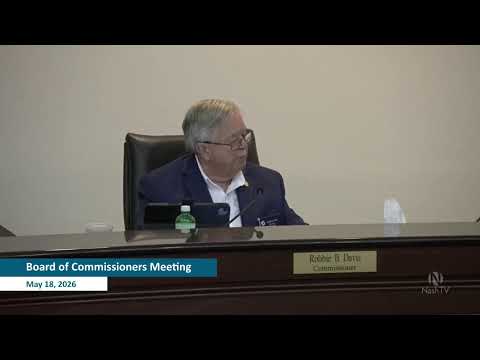
The clarification prompted questions from commissioners about context and comparators. Commissioner Davis asked whether the board should be concerned about the $11 million year‑over‑year increase and requested a county‑by‑county comparison. Thompson said he would provide a list showing the group weighted average and the underlying data used in his analysis.
Why it matters: The unassigned fund balance is the portion of the general fund available for discretionary uses. Thompson noted local policies and state guidance vary, and the Local Government Commission will calculate its own percentages; he described the corrected figure as favorable but said comparisons with peer counties show Nash sits around the middle of the pack.
What commissioners asked for next: Several commissioners asked staff and the auditor to supply comparative data and a reconciliation of year‑to‑year drivers—revaluation effects, vacancy savings, and underestimated revenue from the tax office were cited during the discussion. The auditor said last year's vacancy rate and underbudgeted revenue related to revaluation were drivers of the increase.
The board heard the auditor's correction during the meeting and did not take a formal vote on the audit itself at that time; Thompson said he would provide the requested comparative evidence by follow up to the commissioners.
The corrected audit numbers will be part of materials the board uses while reviewing the FY27 budget, which the manager presented later in the meeting.