Get Full Government Meeting Transcripts, Videos, & Alerts Forever!
Get email alerts on the Land Development Regulations topic
No spam. Unsubscribe anytime.
Planning board backs LDR change to let pet‑grooming be a principal use in commercial/industrial districts
Summary
The board voted to recommend an amendment to the land development regulations to allow standalone pet grooming as a principal use in several commercial and industrial zoning districts while keeping outdoor boarding and other more intensive pet services subject to conditional‑use review.
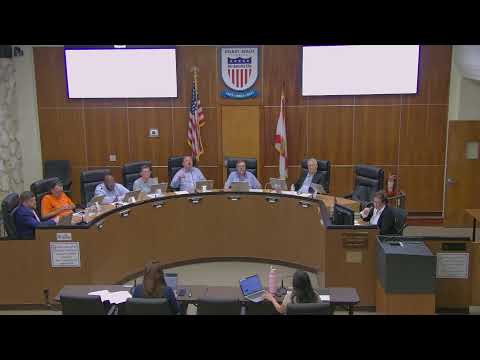
The Delray Beach Planning & Zoning Advisory Board on May 18 voted to recommend that the City Commission amend the land development regulations to make pet grooming (including bathing) a principal use in multiple commercial and industrial districts.
Senior Planner Alexis Rosenberg explained the change (file 592‑2026) would extract “pet grooming” from the broader domestic animal services definition and allow grooming to proceed through an administrative zoning certificate process rather than a conditional‑use hearing, while retaining conditional‑use review for any activity with an outdoor component, overnight boarding, or other uses that could increase noise or nuisance potential. The city previously moved veterinary clinics to a principal‑use process after staff concluded they were less intensive than other domestic animal services.
Rosenberg said the code already requires standards for domestic animal services — such as parking requirements, hours of operation, solid‑core doors and walls for noise mitigation and separation distances from residential zoning when outdoor activity is involved — and those protections would remain. Staff clarified daytime boarding and training would remain conditional uses in districts where they are currently allowed; pet hotels, shelters, training and daytime boarding would become principal uses in certain industrial districts only when no outdoor area is proposed.
Board members asked about noise and barking concerns, and Rosenberg noted that the LDR includes a 300‑foot separation requirement from residentially zoned properties for outdoor facilities and that indoor grooming operations are subject to construction and hours requirements to reduce noise transfer. The board recommended the ordinance to the City Commission by a 6–0 vote.
Next steps: the amendment will be scheduled for first and second reading before the City Commission; staff expects public notice and continued application of operational standards for any domestic animal service.