Get Full Government Meeting Transcripts, Videos, & Alerts Forever!
Get email alerts on the Safe Routes To School topic
No spam. Unsubscribe anytime.
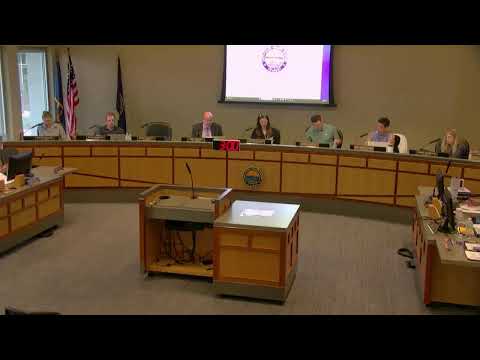
Commission approves MDOT Safe Routes project after heated neighborhood backlash
Summary
The East Grand Rapids City Commission approved MDOT-backed Safe Routes to School projects including a $1.5 million infrastructure award—despite extensive public opposition from Reeds Lake Boulevard residents who said a new sidewalk would remove trees, change yards and may not change pedestrian behavior.
The East Grand Rapids City Commission voted to support Michigan Department of Transportation (MDOT) Safe Routes to School projects and accept associated bids, endorsing roughly $1.5 million in infrastructure grants and $75,000 for school programming, with the city estimated to contribute about $150,000 for engineering.
The presentation, led by city transportation staffer Doug Lefave, outlined the grant’s eligibility and selection process, walking audits done in May 2023, and why the city is focusing improvements on the Reeds Lake Boulevard corridor and the so-called Golden Triangle neighborhoods. Lefave said each eligible school may receive up to $300,000 for infrastructure and $15,000 per district for non-infrastructure programming, and that the original concept was narrowed from a 10-foot trail to a 5-foot concrete sidewalk to conform to MDOT rules and resident feedback. "Each eligible school is eligible for $300,000 towards infrastructure only grants," Lefave told the commission.
During a three-minute public-comment period, a steady stream of nearby residents urged the commission to delay or reject the project. Speakers said the proposed sidewalk would remove long-standing vegetation, shrink private-feeling yards, and offer limited safety gains for students and other walkers. Kevin Loftess, who said he has lived on Reeds Lake Boulevard for 30 years and led a resident petition, said, "We still oppose it," and argued the existing pattern of use (runners, cyclists, adults) suggests people will continue to use the roadway rather than a new sidewalk. Attorney Ben Dilly, representing several residents, urged delay and said the grant funds could be better used on ADA ramps, lighting or speed-calming measures elsewhere.
Commissioners pressed staff on timing and design choices. Questions focused on the June letting date, whether delaying the application would push the project into a less favorable bid cycle, where pedestrian refuge islands should be placed, and how tree preservation and right-of-way constraints would be handled. Staff said MDOT’s grade-inspection process has occurred and that the June letting is already scheduled; they also said where tree removal is unavoidable the city will replace plantings and that many proposed sidewalks lie within public right-of-way rather than on private property. Lefave described extensive outreach: walking audits, resident mailings and on-site meetings; he said some neighbors ultimately accepted a reduced 5-foot sidewalk located as close to the curb as practicable to reduce impacts.
Commissioners acknowledged the neighborhood’s concerns while highlighting the grant’s benefits for connectivity and student safety. Some members said they remained concerned about whether new sidewalks would actually change behavior (e.g., get people off the roadway), while others emphasized that a rare federal grant to improve active-transportation links is difficult to pass up. One commissioner summarized the split: "I don't know if the sidewalk is going to get people onto the sidewalk, but if we can find some way to get people off of the road… it's an accident waiting to happen." (Commissioner Berdick)
The motion before the commission was to support the MDOT-approved Safe Routes projects and authorize acceptance of MDOT bid results for the amounts described in the staff packet. The commission voted to approve the motion; the meeting record notes the motion carries but does not include a roll-call tally in the transcript.
What happens next: staff said the MDOT letting (bid) process is projected in June, and if the low bidder and final construction price exceed the authorized amounts the city will return to the commission for adjustments. Staff also said they will continue resident outreach to document tree-by-tree and irrigation impacts before construction begins, and will explain maintenance responsibilities and any required right-of-way remediation once contract timing is confirmed.
Why it matters: the project would extend pedestrian connectivity in neighborhoods that feed East Grand Rapids public schools, tie into earlier sidewalk additions on Cascade and Robinson roads, and use state/federal funds that would otherwise be unavailable. Opponents say the streetscape and tree canopy will be harmed and question whether the new infrastructure will meaningfully alter pedestrian behavior. The commission’s approval now clears the city to move into the MDOT bid phase.
Votes and procedural next steps: The commission approved the project at the meeting; staff will proceed with MDOT bid acceptance and return to the commission if project costs exceed the grant and city estimates.