Get Full Government Meeting Transcripts, Videos, & Alerts Forever!
Get email alerts on the Signal Removal topic
No spam. Unsubscribe anytime.
Committee approves first step to remove Doseman‑Onida traffic signal, will trial all‑way stop
Summary
The Green Bay committee voted to proceed with a multi‑step plan to remove the traffic signal at Doseman and Onida, citing counts that do not meet signal warrants; staff will flash the intersection, install stop signs if no complaints follow, and bring an ordinance at the next meeting.
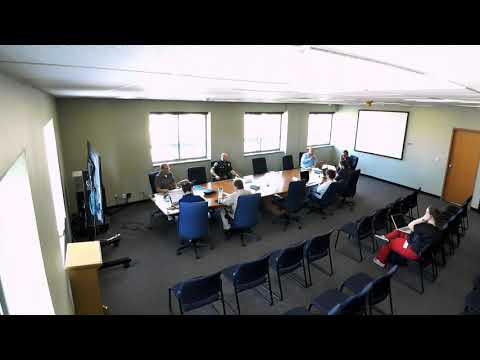
The Green Bay Traffic, Bicycle and Pedestrian Committee on May 18 approved the first step in a plan to remove the traffic signal at Doseman and Onida, after the traffic engineer told members the intersection no longer meets signal warrants.
The traffic engineer said recent counts for the corridor show about 6,300 vehicles — below typical thresholds that prompt signalization. “Typically a signal is usually up around 15,000 before we would look at signalizing it,” the engineer said, and added the warrants and counts indicate the signal is not justified at present. The engineer recommended removing the signal, flashing it to an all‑way red stop for a short trial, installing stop signs and advance warning as needed, and then reading the change into an ordinance at the next meeting if there are no complaints.
A resident who lives on the block said the change will create some brief delays at peak periods but welcomed the all‑way stop as safer than a frequently flashing yellow signal. “Now instead of having to wait for a walk, don’t walk or a kit, everybody should stop for a pedestrian,” the resident said, adding that drivers currently tend to ‘platoon’ through the signal on off‑peak cycles.
Committee members asked clarifying questions about pedestrian crossings and the loss of pedestrian signal heads; the traffic engineer said pedestrian “walk/don’t walk” indications would go away with stop signs but that the all‑way stop tends to improve pedestrian safety because all directions must stop. The committee voted to proceed with the first part of the removal process (take the signal out and flash to all‑way red), with the plan to install stop signs and present an ordinance at a subsequent meeting if the trial produces no substantial complaints. The transcript records voice votes (‘I’) but does not include roll‑call counts or the names of the mover and seconder.
The next procedural step is the trial period (flashing all‑way red), followed by installation of stop signs and a formal ordinance reading on a future agenda if approved.