Get Full Government Meeting Transcripts, Videos, & Alerts Forever!
Get email alerts on the Battery Storage Moratorium topic
No spam. Unsubscribe anytime.
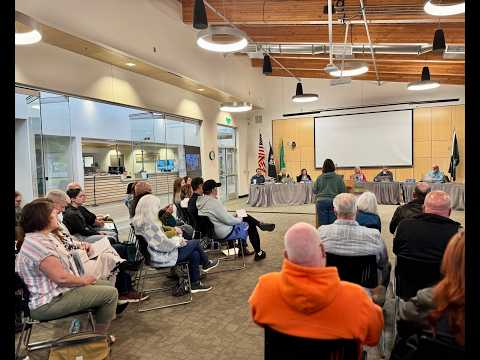
North Bend council enacts 12‑month moratorium on industrial battery storage after lengthy public hearing
Summary
After a multihour public hearing with dozens of Valley residents raising fire, water and fiscal concerns, North BendCity Council unanimously approved a 12‑month moratorium on processing battery energy storage system (BESS) applications within city limits, amending the ordinance to be energy-source agnostic.
North Bend City Council voted unanimously May 19 to adopt a 12‑month moratorium on the submittal and processing of industrial-scale battery energy storage system (BESS) applications within city limits, giving staff and the planning commission time to develop regulations, interagency coordination and public‑safety guidance.
The ordinance (AB26‑045) was introduced by Mayor Pro Tem Errol Tremolada as a pause to study public‑health and safety risks, land‑use compatibility and potential regulations after regional interest in large BESS projects surfaced nearby. Councilmember Mark Joselyn successfully moved a narrow amendment to remove the phrase "produced by renewable energy sources" from a whereas clause, making the moratorium agnostic to the energy source stored in a facility.
The moratorium, adopted as a first‑and‑final reading, bars the city from accepting or processing new applications for battery storage facilities for 12 months. Staff told council the pause is intended to allow consultation with East Side Fire and Rescue, the Puget Sound Clean Air Agency, the King County Sheriff's Office, state siting authorities and affected tribes before deciding whether and how to allow BESS in city zones.
Residents from nearby Snoqualami/Snowquami communities filled public testimony during the hearing, citing fire‑suppression and evacuation risks, water supply concerns, potential toxic emissions from thermal runaway events, and the limited local fiscal benefits of large industrial sites. "Clean energy should never be at the expense of public health and safety," said Melody Cora, a valley resident, during public comment, calling on the council to "take the time needed to truly understand the impact these industrial‑scale BESS can have on our community."
Other speakers urged the city to file public comments with state regulators and investigators. Peter Lully told council he and others believe Puget Sound Energy included a nearby BESS in a recent rate case and recommended the city ask the Utilities and Transportation Commission (UTC) to scrutinize whether those costs are prudently recoverable from ratepayers. Several speakers asked the city to request disclosure from utilities and vendors about any North Bend area interconnection or project planning.
Councilmembers framed the moratorium as a limited, precautionary step, not a policy decision favoring or opposing battery storage outright. "This is a timeout to gather the data and due diligence so we can make an informed land‑use decision," Tremolada said. Councilmember Susan Toruson added the pause is intended to protect public safety while staff and the planning commission explore appropriate local regulation.
Council also authorized the mayor to draft and send a separate comment letter to the UTC and King County urging scrutiny of a nearby proposed project and requesting disclosure about whether utilities or affiliates are considering sites in the North Bend urban growth area; staff said they would prepare the letter and review legal points and filing timelines (a May 26 UTC filing deadline was discussed in public comment).
The ordinance instructs staff to work with regional agencies and the Snoqualami tribe, and the planning commission will prepare recommendations on whether to allow BESS and what controls and permit conditions would be required if they are allowed. The council emphasized the moratorium applies only within city limits and does not change county permitting authority over unincorporated areas.
Council vote: AB26‑045 (moratorium as amended) adopted unanimously (6‑0). The amendment to strike "produced by renewable energy sources" passed before the final vote.
What's next: staff and the planning commission will prepare a work program covering technical reviews (fire suppression, water use, interconnection disclosure, public notice and evacuation planning) and stakeholder consultation; council requested regular updates and a proposed schedule for next steps at future meetings.