Get Full Government Meeting Transcripts, Videos, & Alerts Forever!
Get email alerts on the Employee Health Plan topic
No spam. Unsubscribe anytime.
Gregg County raises emergency‑room copay for two employee plans after consultant’s recommendation
Summary
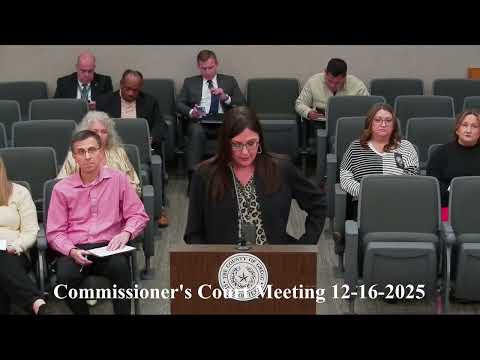
The Gregg County Commissioners Court voted Dec. 16 to increase emergency‑room copays from $500 to $1,000 for two employee health plans and a retiree plan, a change the county’s consultant said could save about $131,000 but that commissioners warned could deter some people from seeking timely emergency care.
Gregg County Commissioners Court on Dec. 16 approved a plan‑design change that raises the emergency‑room copay from $500 to $1,000 for Plan 2, Plan 3 and the county’s retiree plan, a step officials said is intended to curb nonurgent emergency‑room use and reduce health‑plan costs.
Don Brenson of Brenson Consultants told the court that, based on last plan year’s use, Plan 2 had 148 emergency‑room visits and Plan 3 had 113; the retiree plan had one participant who made one visit. "If that utilization occurs again, the savings to the plan would be about $131,000," Brenson said, describing the proposed increase as one modest lever among a set of cost‑containment steps that also include pharmacy strategies.
Supporters said the change targets high‑cost, low‑acuity ER use and encourages employees to use telemedicine and urgent care for minor conditions. Brenson said the county already promotes a zero‑cost telemedicine benefit and that urgent care co‑pays are substantially lower than ER charges.
Several commissioners raised access and workforce concerns during the discussion. One commissioner warned that higher cost‑sharing could cause some employees to delay care: "If it's worth going to the emergency room, it's worth a thousand bucks," another commissioner said, adding that the court did not intend to deter genuinely emergent care. Commissioners asked that staff emphasize education about telemedicine and urgent care alternatives and noted the county prefers hospital‑connected ERs when emergency admission may be necessary.
Brenson and court members also outlined broader measures to reduce plan costs, including pharmacy contracting and an international pharmacy program staff said could yield additional savings. The consultant framed the $131,000 estimate as dependent on future utilization: "I can't say for sure that the same number of emergency room visits will occur this plan year, but it is likely," Brenson said.
A motion to approve the copay change was made, seconded and adopted by voice vote. Court members discussed implementation timing and indicated the change could be effective on the first day of a month chosen by the court.
The court’s vote implements the copay increase but left other proposed changes (particularly pharmacy initiatives) to staff action; commissioners asked for follow‑up information on expected savings and outreach steps to reduce the risk that cost‑sharing would deter necessary emergency care.