Get Full Government Meeting Transcripts, Videos, & Alerts Forever!
Get email alerts on the Monitoring And Enforcement Tools topic
No spam. Unsubscribe anytime.
DEP outlines monitoring, odor‑complaint process, idling enforcement and data‑center permit work
Summary
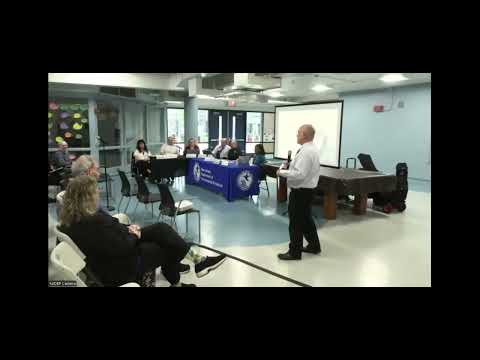
At a community meeting in Elizabeth, DEP staff explained how residents can use monitoring tools and the 24‑hour hotline to report odors, described the technical steps needed to verify nuisance complaints, outlined idling law enforcement, and said the agency is identifying unpermitted data centers.
DEP enforcement and monitoring staff used the Elizabeth session to walk residents through practical ways to document air problems and request agency action.
Jeff Meyer, bureau chief for air enforcement in the Northern Region, described the odor‑investigation process in detail: callers should report incidents to the DEP 24‑hour hotline, an inspector or county health official must verify the odor on the complainant’s property while the smell is occurring and the complainant must be willing to sign a statement to support an enforcement action. Meyer emphasized that DEP must be able to substantiate a violation before issuing enforcement penalties.
Larry C., chief for diesel enforcement and emission measurement, reinforced the message: residents should call every time they experience a problem because each verified incident is recorded and repeat violations can increase penalties substantially. "Call the hotline. Every day, if you call once... Every call... it's recorded in our system," he said.
On idling: Robin Heston Murphy reviewed the state idling prohibition (no more than three minutes, with exemptions) and described outreach and inspection programs. Panelists said enforcement capacity for on‑road idling and tampering is limited — Larry noted there are four inspectors for idling/tampering statewide — so the department relies on targeted complaints and local partnerships to prioritize enforcement activity.
Monitoring and community science: Anthony Carl described the state’s 29 regulatory monitors and the mobile monitoring campaigns in Newark and Elizabeth; he encouraged community sensor projects and said those data can help target further investigation though they are less precise than federal regulatory monitors. Melissa Evanego said DEP will review community data and invited residents to share methodologies and raw data for consideration.
Data centers and backup generators: Residents asked how DEP would monitor and quantify the cumulative impact of data centers' backup generators. Ken Ratzman and other staff said any facility burning fossil fuel for backup power must obtain an air permit and that DEP is working to identify data centers that installed without notifying the agency. If an operation becomes large enough, DEP said multisource modeling and additional monitoring would be used to assess impacts.
Practical takeaways: DEP urged residents to use the "What's in My Community" mapping tool to find local permits and facilities, to report odors via the DEP hotline, to submit community‑science data for review, and to participate in public hearings associated with permits. The Office of Environmental Justice provided environmentaljustice@dep.nj.gov for follow‑up and promised to share slides and the survey link after the meeting.