Get Full Government Meeting Transcripts, Videos, & Alerts Forever!
Get email alerts on the Compressor Permit Williams Transco topic
No spam. Unsubscribe anytime.
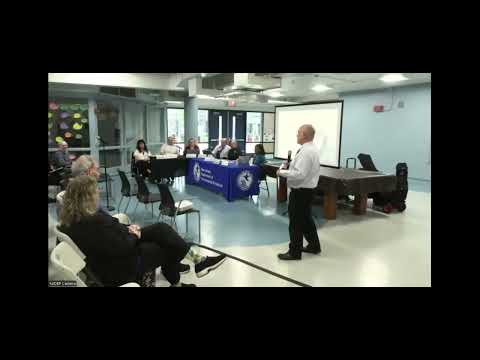
Residents press DEP over Williams Transco compressor permit and blowdown accounting
Summary
Community members and advocates at the DEP air‑quality session pressed the agency about a Williams Transco compressor‑station permit, disputed blowdown counts and whether DEP accepts monitoring data from outside applicants.
Residents and advocates used the DEP Elizabeth meeting to press officials about the Williams Transco compressor‑station permit and gaps they see in how emissions and blowdown events are counted and evaluated.
Ellie Gruber, co‑chair of the League of Women Voters Natural Resources Committee, told the panel she had “scientific, irrefutable proof” that compressor stations emit methane, VOCs, NOx and dangerous particulates and urged careful scrutiny of the permit that would extend pipeline infrastructure through New Jersey. Linda Powell raised a specific discrepancy she found in the permit materials, saying one page listed 10 blowdowns a year while another listed 52 — a difference that, she argued, affects whether a facility is treated as a minor or major source.
Ken Ratzman, assistant director of the air quality division, described the DEP’s review process for the compressor application: it underwent a full technical review and an extended public‑comment period and, in the department’s assessment, “met all the standards and requirements of the regulations.” Ratzman explained that permit reviewers consult numerous databases, run independent analyses and do not rely solely on the applicant’s submittal. He also noted that some blowdown events can occur off‑site and are therefore harder to attribute to a single facility.
On the record: Ratzman said DEP cannot reject an application that meets legal standards and the department issued the permit after review. Community speakers pushed back that permitting baselines alone are insufficient to address cumulative impacts in overburdened neighborhoods and asked for more real‑time monitoring and follow‑up on blowdown accounting.
Next steps and outstanding items: DEP offered to discuss the compressor‑specific technical details offline and encouraged residents to provide additional data and comments during public processes. The transcript records the exchange but does not resolve the blowdown count discrepancy; DEP staff invited continued engagement and follow‑up with technical staff off the public record.
What to watch: any formal appeals, permit modifications or follow‑up technical reports from DEP or independent monitors that address blowdown frequency and cumulative risk in the neighborhoods surrounding compressor stations.