Get Full Government Meeting Transcripts, Videos, & Alerts Forever!
Get email alerts on the Curriculum topic
No spam. Unsubscribe anytime.
District unveils five‑year science curriculum review; middle‑school OpenSED adoption and schedule changes recommended
Summary
The Ridgewood Public School District presented the Year‑1 findings of a five‑year science program review and recommended a phased adoption of OpenSED for middle school, moving environmental science from 9th to 11th–12th grade and adding a 9th‑grade biology honors pathway. Staff emphasized recruiting time and lab resources as constraints.
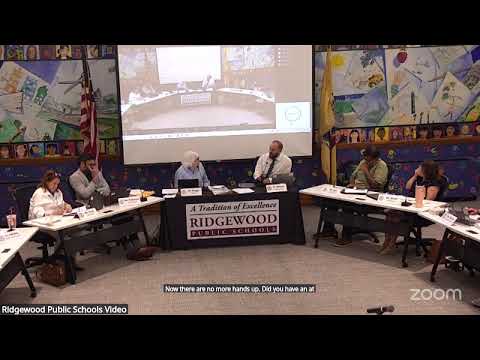
At a May 19 board meeting, Tara Taylor, the district’s science supervisor, presented the Year‑1 findings of a five‑year science program review (grades 6–12) and recommended a phased adoption of the OpenSED middle‑school curriculum.
Taylor said the district evaluated its 6–12 science sequence against comparable districts, reviewed textbooks and resources up for renewal, and collected feedback from teachers, students and parents. “We evaluated the current 6–12 science sequence. We researched all the current science program offerings with those of surrounding and comparable districts,” she said.
Key recommendations include: - A three‑year phase‑in of OpenSED at the middle‑school level beginning in 2026–27, supported by teacher training and initial lab‑kit purchases paid by the district for year one; Taylor said the OpenSED platform itself is free but some lab kits and consumables will be procured for implementation. - Moving Environmental Science away from 9th grade into 11th–12th grades to ensure all incoming freshmen begin with a biology sequence and to create an additional college‑prep elective option in later years. - Adding a 9th‑grade Biology Honors course to maintain rigor and alignment with math sequencing.
Taylor summarized survey feedback showing strong student, parent and teacher satisfaction with the program overall but a recurring request for more rigor and for increased hands‑on lab time. Administrators acknowledged that schedule constraints and lost double‑lab periods have reduced discretionary lab time; Taylor said addressing those constraints would require additional staffing or schedule changes.
Students on the panel told the board they valued a mix of online simulations and hands‑on labs. One student summed up the consensus: online resources help reduce experimental error and prepare students, but “the physical labs … bring value into a childlike learning experience.”
Board discussion focused on implementation logistics: timing of adoption, kit procurement and whether OpenSED’s order of topics required phased roll‑out to avoid students missing standards tested in later grades. Taylor said the district will implement the middle‑school sequence beginning with sixth grade next year and follow with the remaining grades in subsequent years to preserve coverage for state assessments.
Administrators also flagged staffing as a limiting factor. Taylor said restoring lab time would require additional teacher resources in some years. The board requested a follow‑up memo with cost estimates for kits, training and any needed staffing adjustments.
The presentation was informational; the board will consider formal adoption steps and related budget requests in coming meetings.