Get Full Government Meeting Transcripts, Videos, & Alerts Forever!
Get email alerts on the Water Rates topic
No spam. Unsubscribe anytime.
Highland Council reviews PI metering options as state mandate looms
Summary
Staff outlined options for tiered pressurized-irrigation rates and the city's plan to educate residents after state law requires metering by 2030. Council supported further study, public outreach and winter 2027 implementation planning; staff warned surface-water allocations and growing demand may force use of "holdover" supplies.
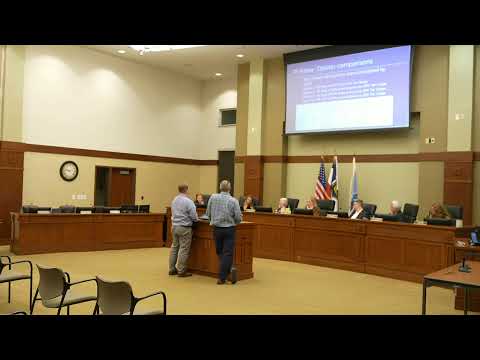
Highland City staff on May 19 presented draft rate structures for pressurized irrigation (PI) now that state law requires PI meters on all secondary irrigation connections by Jan. 1, 2030. The presentation laid out four rate options — a fixed-plus-square-foot base with tiered per-use charges and three square-foot-based variants — and urged the council to pick a path that funds the system while rewarding conservation.
The nut of the proposal is conservation: meters and tiered pricing shift some charges from a flat fee to usage-based tiers so customers who stay within an allotment for their lot size pay less, while heavy users face progressively higher per-thousand-gallon charges. Staff said the city's preliminary data show roughly 80% of metered accounts used more than their modeled allotment last year, and that options that keep a meaningful base charge while layering tiers are likely to recover needed revenue without creating abrupt spikes for average users.
Why it matters: meters and tiered bills are intended to reduce peak-season irrigation and protect regional water supplies. Staff stressed that water-supply sources are strained this year: snowpack and allocations have fallen in some basins and city managers warned the city could need to draw on stored "holdover" supplies if dry conditions persist.
What was said: Chris, the city's public-works presenter, told the council the proposal included customer tools and education: an online allotment calculator, enhanced bill-level usage data and a phased schedule so staff can re-evaluate after the 2026 measurement season. "Our goal is that if residents use their allotment they will pay roughly what they pay today, but excessive use will be penalized to encourage conservation," he said.
Council response and next steps: Council members asked detailed questions about how allotments are calculated, how water rights and shares affect entitlements, and whether rates should be set using 2025 data rather than the atypical 2026 season. Several members said they favor staff's approach of narrowing options, returning with modeled examples (by lot size and by sample customers) and conducting public education and open houses in the fall before finalizing rates. Staff proposed a fall review and considered an effective date for new rates in 2027 to allow outreach and billing-system changes.
The meeting did not adopt a final rate. Staff will return with narrowed options, example household impacts, and a public-education plan that explains allotments, ties to water rights and how tiered pricing will affect summer bills.