Get Full Government Meeting Transcripts, Videos, & Alerts Forever!
Get email alerts on the Childrens Behavioral Health Plan topic
No spam. Unsubscribe anytime.
Travis County launches 'Connecting the Dots' children’s behavioral‑health plan, highlights $14M in mental‑health funding
Summary
Travis County unveiled a five‑year children’s behavioral health strategic plan and detailed investments in crisis and diversion services, while partners described gaps in capacity and the need to expand alternatives to jail for people in crisis.
Travis County announced a new five‑year children’s behavioral health strategic plan, “Connecting the Dots,” and highlighted more than $14 million in county funding for mental‑health and substance‑use programs in fiscal year 2026.
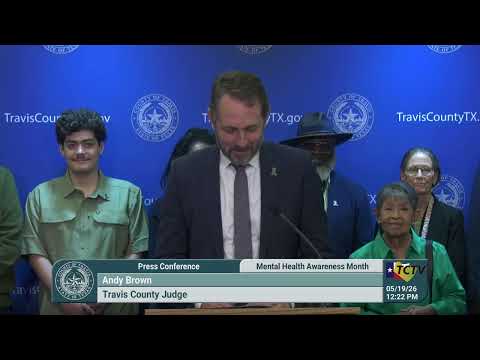
Judge Brown opened the event by recognizing Mental Health Awareness Month and pressing the scale of need, saying mental health "is essential to our overall health and well‑being" and citing national and local prevalence figures for adults and youth. The plan, officials said, was shaped by parents, caregivers, educators, health‑care workers and youth and aims to improve basic supports, expand access to culturally responsive care, strengthen services for complex cases and simplify information about available programs.
"Every single child deserves the chance to grow up healthy, supported, and connected to care," Judge Brown said, framing the plan as a cross‑sector effort involving schools, health providers, nonprofits, faith communities and local government.
Jeff Richardson, CEO of Integral Care, noted local service metrics and urged continued community and financial backing. Richardson said "recovery works" and promoted crisis navigation resources including 988 and 211, asking the public and partner organizations to help sustain momentum beyond Mental Health Month.
Dr. Desmar Walks, Austin‑Travis County health authority and medical director for Austin Public Health, said the plan reflects evidence that many mental‑health conditions begin in adolescence and that early intervention improves outcomes. "Mental health is public health," Desmar Walks said, urging families and providers to prioritize early identification and connection to services.
Officials highlighted several existing programs tied to the plan: a 24/7 psychiatric emergency service center that has served more than 1,200 people, and a therapeutic diversion pilot that allows individuals to stay up to 90 days to stabilize and transition into housing and ongoing care. While 219 people have participated in the diversion pilot, speakers said more than 600 people have been referred and the program currently has only 25 beds—an example organizers used to illustrate capacity limits the plan seeks to address.
The plan’s authors said it will emphasize growing telehealth options, expanding school‑based supports, improving navigation tools for families and increasing culturally responsive services. Officials did not present a detailed fiscal schedule for the plan at the event; the county said only that more than $14 million was budgeted for mental‑health and substance‑use programs in fiscal year 2026.
The launch included personal testimony from community members and a youth speaker who urged that young people be given a stronger role in shaping services. Officials said the work will require continued advocacy and coordination across public and private partners; they encouraged residents to use crisis hotlines and community resources and to participate in ongoing efforts to expand services.