Get Full Government Meeting Transcripts, Videos, & Alerts Forever!
Get email alerts on the Go Bond topic
No spam. Unsubscribe anytime.
Commissioners approve step to apply for general obligation bond; school leaders warn of aging wells, lead and asbestos
Summary
The board approved resolutions to publish intent and apply to the Local Government Commission to put a general obligation school bond on the ballot. Dr. Rodney Peterson outlined critical school infrastructure needs — failing wells at three rural schools, lead and asbestos at Woodland, and an estimated capacity gap — and the school board recommends a new middle school as the long-term solution.
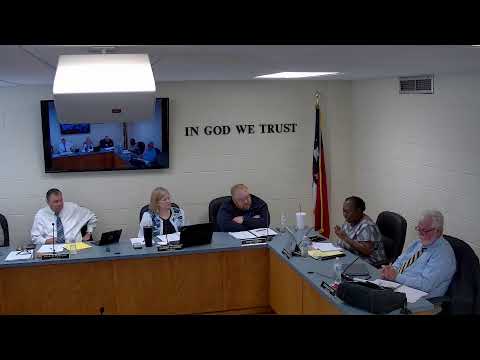
Person County commissioners on May 18 approved a set of resolutions directing publication of a notice of intent and authorizing application to the Local Government Commission for a proposed general obligation (GO) school bond referendum, and authorized advancing up to $100,000 from the capital investment fund to cover bond-issuance costs pending reimbursement.
Tracy Clayton, the county's chief financial officer, reviewed the statutory calendar and deadlines the county must meet to place a GO bond referendum on the ballot, noting a compressed timeline for notices, hearings and filings. "This is a very tight calendar," she said, outlining dates from notice publication through November election deadlines.
Dr. Rodney Peterson presented the school system's case for new capacity and urgent repairs, identifying three rural elementary schools with aging wells and water-quality concerns (North End, Oak Lane and Woodland), and describing Woodland's lead-paint and asbestos problems discovered in inspections. Peterson said some wells are on their last service life and that water production has fallen at several sites. He described one estimate that the district needs roughly 1,000 to 1,200 seats now, and discussed a board-preferred option of a new middle school with about 1,500 seats to serve long-term needs.
Peterson also said ADA and safety retrofits can reduce classroom capacity during renovations and that certain schools may face immediate space pressure when projects are implemented. He noted options studied by the school board ranged from expensive phased renovations to a single new middle school; the board concluded the new middle school would better meet long-term needs despite higher upfront cost.
The commissioners approved three motions: (1) adopt a resolution directing publication of notice of intent to apply to the LGC, (2) adopt a resolution making statements of fact concerning the proposed bond issue and authorizing application to the LGC, and (3) authorize the chief financial officer to advance up to $100,000 from the CIF to pay issuance costs prior to sale, to be reimbursed on closing. All motions passed by voice vote at the meeting.
Commissioners asked follow-up questions about contingency plans for catastrophic well failures (leasing mobile units could require significant additional costs), the timeline to occupancy if voters approve a bond (roughly 2—d2.5 years after approval), and the degree to which renovations or new construction would alleviate capacity and safety concerns.
The board also scheduled the bond-order introduction and public hearings required under state law as it moves through the statutory LGC and elections timelines.