Get Full Government Meeting Transcripts, Videos, & Alerts Forever!
Get email alerts on the Land Use topic
No spam. Unsubscribe anytime.
Mount Holly adopts two land‑use text amendments on dumpster setbacks and open‑space requirements
Summary
Council adopted staff‑recommended amendments: TA‑26‑1 reduces the zoning setback for dumpsters to ease redevelopment of lots of record; TA‑26‑3 requires common open space for new residential subdivisions or a fee‑in‑lieu, modeled on a neighboring towns ordinance.
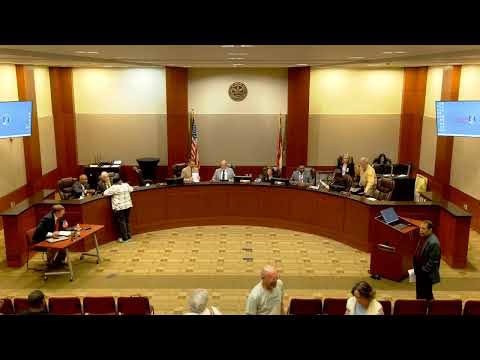
The Mount Holly City Council unanimously adopted two staff‑drafted land‑use text amendments during its May 11 meeting.
Planning staff member Mr. Livingston presented TA‑26‑1, which would amend chapter 3, section 3.21A of the zoning ordinance to relax the current 25‑foot dumpster setback that staff says makes some lots hard to develop. "Staff feels that this update is needed due to the current setback of 25 ft for dumpsters to be too cumbersome," Livingston told council. The Planning Commission recommended approval on May 4; with no public speakers, council opened and closed the public hearing and voted to adopt the amendment.
The council also approved TA‑26‑3, a proposed update to section 153‑056 of the subdivision and land development ordinance that would require residential subdivisions to provide common open space for public use or pay a fee in lieu based on land purchase price or appraisal. Planning staff said the proposal was developed in cooperation with Parks and Recreation Director Eric Smallwood and was modeled on an ordinance from the town of Harrisburg. The Planning Commission recommended unanimous approval.
Both amendments were advanced by motions from Councilman Meadows (TA‑26‑1) and Meadows (TA‑26‑3) with seconds by Councilman Reeves. Council voted in favor of both items.
Staff said the open‑space amendment aims to increase recreational acreage for residents in new developments and provides a developer option to pay a fee when public access is not feasible. Specific fee calculations would be set based on purchase prices or appraisals if challenged.