Get Full Government Meeting Transcripts, Videos, & Alerts Forever!
Get email alerts on the Behavioral Health topic
No spam. Unsubscribe anytime.
Santa Clara supervisors proclaim Mental Health Awareness Month, warn of looming funding threats
Summary
Supervisors marked Mental Health Awareness Month and praised expansions in local treatment capacity while warning that state budget changes could imperil mobile crisis funding; county leaders urged residents to contact state lawmakers to preserve services.
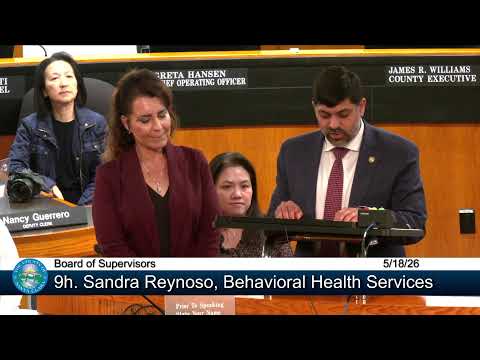
The Santa Clara County Board of Supervisors on May 18 proclaimed May 2026 as Mental Health Awareness Month and used the occasion to press state lawmakers to protect county crisis services amid looming budget uncertainty.
Supervisor Susan Ellenberg said the county has expanded inpatient behavioral‑health capacity, telling the board that “we have expanded our capacity by 269 in‑patient treatment beds, which translates to serving an additional 3,000 patients every year” as part of a multi‑year effort to reach a 2030 goal. Ellenberg framed the expansion as part of a broader strategy to destigmatize treatment and expand prevention and early intervention services.
Supervisor Margaret Abe‑Koga and others referenced recent local tragedies and rising demand for services, urging culturally competent care and stronger community partnerships. Abe‑Koga said peer support and outreach are essential for reaching young people and non‑English speakers.
David, representing Allen Rock Counseling Center (ARCC), thanked the board for recognition and warned that the county’s behavioral‑health system faces “one of the most significant structural changes” in decades. He urged careful planning, saying: “If not done carefully, I fear large parts of the system could really have trouble, leaving many without the necessary care.”
Ellenberg noted a specific state policy risk: she said the governor’s May Revision would make the mobile crisis response team model an optional service for Medicaid reimbursement, meaning those services could lose existing levels of funding. She urged residents to contact state representatives and share experiences with mobile crisis teams to preserve the service.
The board reiterated its 2022 declaration treating behavioral health as a public‑health crisis and described ongoing efforts: expanding inpatient beds, boosting mobile and crisis response, strengthening school‑based supports and collaborating with community‑based organizations that deliver a large share of care.
County officials and community partners emphasized that much of current service delivery is run by nonprofit providers and that preserving funding will require diversified reimbursement strategies, including private insurance and federal sources. The board said it will continue advocating at the state level and working with local providers to protect and adapt services as budgets change.
The board concluded the item with a recognition of providers and a pledge to continue pursuing resources and partnerships to keep services accessible and culturally responsive. No formal policy vote followed this proclamation; it was a ceremonial designation and a public statement of priorities.