Get Full Government Meeting Transcripts, Videos, & Alerts Forever!
Get email alerts on the Riverside Village Purchase topic
No spam. Unsubscribe anytime.
North Augusta council approves purchase of Riverside Village parking deck and clubhouse unit to anchor cyber presence
Summary
The City Council approved Resolution 2026-29 to buy Parcel B (parking deck) for $5.3 million and Unit 3 of the Riverside Village clubhouse for $1.6 million, authorizing roughly $7 million in total funding transfers to support a planned cyber infrastructure presence; the measure passed 5-1 after public comment and council debate.
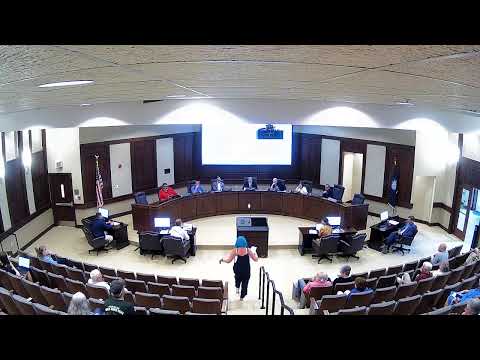
North Augusta’s City Council voted 5-1 on May 18 to approve Resolution 2026-29, authorizing the city administrator to sign purchase-and-sale agreements for Parcel B (the privately owned parking deck in Riverside Village) and Unit 3 of the Riverside Village clubhouse as part of a downtown cyber infrastructure effort.
City Administrator Jim Clifford told the council the two agreements set the parcel B purchase price at $5.3 million and the clubhouse unit at $1.6 million, with a roughly $100,000 buffer for closing costs and contingencies that brings the total authorization to about $7 million. He said Greenstone, the developer, will pay all outstanding 2025 city and county taxes (including penalties) and the city will withhold $150,000 in lieu of a performance bond for Parcel B.
"What you're authorizing tonight is for me as your agent to sign on behalf of the city for the purchase sale agreement of those two parcels," Clifford said, framing the transaction as a way to preserve downtown assets and provide a foothold for future cyber-related tenants.
Clifford described the financing mechanics: funds will move from the Riverfront Central Core Redevelopment Fund to the Tax Increment Fund and then to the North Augusta Public Facilities Corporation fund used for debt service. He said these are transfers between city accounts rather than net losses of city cash and that some of the purchase would be supported by DOE settlement funds earmarked for cyber infrastructure.
Council members pressed Clifford on several risks and assumptions. He said Parcel D is no longer available after private negotiations and that the owner declined to sell. Clifford estimated 2025 tax collections related to the deck were about $157,000 to the county and roughly $42,000 to the city; he also said last year the deck’s revenue was about $8,000 and that the current figure does not capture potential future revenue from agreements with South City Partners.
Several speakers during public comment supported a local cyber initiative but urged clearer planning. Former Mayor Bob Pettit said North Augusta should "continue to aggressively pursue cyber opportunities," citing regional investment at Fort Gordon and in Georgia. Diane LaRue urged the council to plan staffing, programming and sustainable operations rather than buying space for others to use. Fred Illardi questioned concentrating development in Riverside Village and asked why the clubhouse office space has been vacant for seven years. Laura Garner said citizens lack clarity about whether a Sensitive Compartmented Information Facility (SCIF) would be required and noted accreditation timelines could be long.
Clifford and council members repeatedly clarified that a SCIF is not part of the city’s purchase requirement and that, if a tenant required a SCIF, the tenant or a federal partner would typically fund and oversee its construction and accreditation. "A government entity unto its own...cannot just build a SCIF and call it a SCIF," Clifford said, adding that SCIF accreditation involves federal oversight and can take many months.
Council debate balanced competing priorities: some members emphasized preserving downtown parking and preventing the Green Jackets baseball tenancy from being jeopardized if the privately owned deck fell into foreclosure; others questioned whether buying a large parking deck primarily to secure a single story of office space represented good value.
Mayor Pro Tem Kevin Toole moved the resolution; Pat Carpenter seconded. The motion carried 5-1. Mayor Britt Williams said the purchase gives the city flexibility to pursue workforce and educational partnerships downtown while protecting existing recreational and commercial uses.
The resolution authorizes the city administrator to execute the purchase-and-sale agreements and to move the described funds. The council did not specify a target tenant; Clifford said staff has not identified a tenant with an immediate SCIF requirement. He recommended pursuing multiple strategies for cyber infrastructure, including educational partnerships with USC Aiken and local schools.
Next steps include finalizing documents and completing the transfers described in the agreements. The City Council did not adopt a separate ordinance or plan for tenant selection at this meeting.