Get Full Government Meeting Transcripts, Videos, & Alerts Forever!
Get email alerts on the Special Education topic
No spam. Unsubscribe anytime.
Parents press Santa Ana USD on special education services and fairness in girls athletics during public comment
Summary
At least 22 public speakers urged the board to improve special education identification, timeliness of IEPs and dyslexia interventions, and raised concerns that policies allowing gender-nonconforming students in girls sports unfairly displace female athletes.
Dozens of community members used the board's public comment period to press the Santa Ana Unified School District for changes on special education services and on athletic policies they said affect girls' teams.
Parents and educators described delays obtaining evaluations and individualized education program (IEP) services, inconsistent teacher adherence to accommodations, and a need for stronger district training and transparency. Leonor Anastasio said she spent a year trying to get her daughter assessed and that the delay had damaged the student's confidence and mental health. "I spent an entire year trying to get my daughter assessed, but I received no assistance...this changed everything," Anastasio said during public comment.
Speakers including Andrea Ozaran, a longtime early childhood teacher, urged the district to enforce FAPE obligations and to avoid a "one-size-fits-all" approach when placing special education students into general-education classrooms.
Several public commenters focused on high school athletics and argued that allowing biological males who identify as female to compete in girls' events can deny biological females opportunities. Parents and students described recent regional competitions where they said a male-bodied athlete took qualifying places and medals, leaving female athletes out of advancement. "This is not about hate or exclusion. It's about fairness, safety, and equal opportunity for female athletes," 11th-grader Eleni Morales told the board.
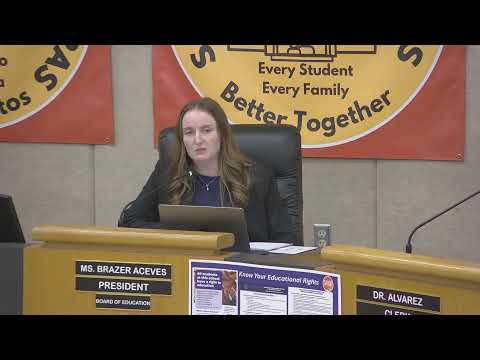
Board members and district staff listened, and several trustees asked staff to provide follow-up briefings. Staff said they already rely on district policies and state law in setting athletic eligibility and that any legal questions would require review. The district reiterated obligations to provide timely evaluations and said it will continue work on special education communication and staffing practices.
The public comments reflected a mix of requests: faster assessment and IEP follow through, more professional development for teachers on accommodations, and legal and policy analysis on athletics eligibility. Board members did not adopt any new policy during the meeting; they took the concerns under advisement and asked staff to return with further information.