Get Full Government Meeting Transcripts, Videos, & Alerts Forever!
Get email alerts on the Agenda Rules topic
No spam. Unsubscribe anytime.
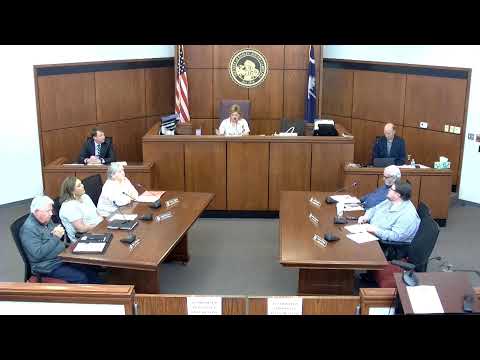
Easley City Council holds first reading of ordinance to change how council items reach the agenda
Summary
At a special meeting the Easley City Council conducted a first reading of Ordinance 202618 to amend Chapter 30 (meeting rules) and would require written requests from three council members to place items on the agenda; the city attorney said the change complies with state law, public commenters urged a delay, and the council voted on first reading before entering executive session.
EASLEY — The Easley City Council conducted a first reading of Ordinance 202618, which would amend Chapter 30 of Title 3 of the Easly City Code to change how items are placed on the council agenda.
During public comment, residents urged civility and more time for public review. Andy Hendricks of Ward 3 said he had emailed the mayor and council and asked members to "speak to each other with far more respect," adding, "Who you are and what you stand for matters." Susan Sheridan, who said she has been a business owner in Easley for 42 years, asked the council to table the vote so citizens could compare the proposed ordinance with current law.
City Attorney presentation and ordinance details The city attorney told the council the ordinance "complies with state law," citing provisions of the state code and explaining the proposal centers on Section 30.24 (who sets the agenda). He said the draft would have the city administrator prepare a proposed agenda in consultation with council and would require that matters be requested in writing by three council members to be placed on the agenda by 5 p.m. the Tuesday before a regular meeting. The attorney told the council that state law recognizes a council's authority to set its own rules and that the proposed text does not, in his view, conflict with state law.
Council debate and arguments Council members split over the change. One member said the existing practice allows a single officeholder or a two-member objection rule to prevent matters from reaching public discussion and gave examples of items they said were previously blocked, including a requested recognition, the Cananan Land Project, and rules-and-procedures updates. That council member said the proposed three-member requirement was designed to prevent a minority of two members from keeping city business off the agenda.
Opponents and caution Other speakers cautioned the change could be perceived as diminishing the mayor's administrative authority or create a long-term "voting block" that would limit public input on future decisions. One speaker cited an estimated $40,000 cost for a referendum on changing the city's form of government and said many constituents had asked for a public vote; the transcript records the $40,000 figure as an estimate mentioned during remarks.
Procedural outcome A motion to accept the ordinance for discussion was made and seconded. The mayor called for members to raise their hands for the vote on Ordinance 202618 (first reading). The transcript records the call for "all in favor" and "all opposed" but does not include a roll-call tally in the provided segments. After the vote, the council moved, seconded, and voted to enter an executive session on personnel and attorney–client matters.
Why it matters The ordinance would clarify internal council procedures for adding items to the agenda and could change how easily a majority of council members can secure public discussion of matters they sponsor. Supporters said the change prevents a small minority from blocking discussion; opponents said it risks perceived erosion of the mayor's administrative prerogatives and urged delaying a final decision until the public has more time to review the proposal.
Next steps The meeting proceeded into executive session; no additional public votes or final ordinance adoption were recorded in these segments. If the council advances the ordinance to a second reading and final vote, that action and any roll-call tally should be recorded in the official minutes.