Get Full Government Meeting Transcripts, Videos, & Alerts Forever!
Get email alerts on the Housing Development topic
No spam. Unsubscribe anytime.
Council moves Cross Hollow RDO to action after intense public comment on density and parking
Summary
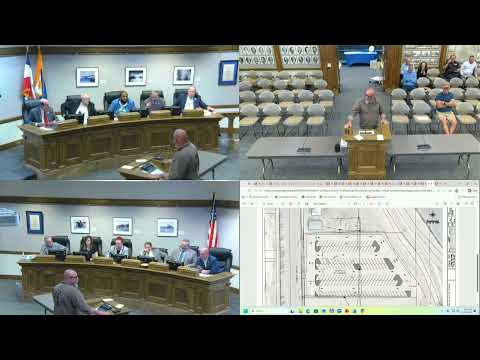
After a long presentation and extensive public comment, council agreed to put the Cross Hollow Residential Development Overlay (RDO) on next week's action agenda while asking staff and the developer to tighten amenity triggers, parking rules and R1 buffer protections along Cody Drive.
The council agreed Monday to advance consideration of a Residential Development Overlay (RDO) for the Cross Hollow area but asked staff to refine several key terms after residents urged protections for existing neighborhoods.
Developer representatives and city planners outlined a plan that would allow roughly 350 units across three pods with a mix of single‑family detached homes, townhomes and higher‑density R3 product. Staff said the planning commission recommended a mix of densities and that design and amenity obligations be tied to unit counts.
Residents during a long public comment period said the area has already absorbed large numbers of high‑density units and asked the council to preserve R1 frontage along Cody Drive, limit parking spillover onto nearby streets, and tie amenities and infrastructure obligations to specific door counts rather than vague phases. Ann Clark and several neighbors said higher density would change neighborhood character and strain parking and traffic: “I moved here because Sunset Canyon was predominantly R1,” Delisa Robinson said.
Councilors and staff discussed technical fixes: clarify the term "apartment" (building code treats condos and apartments similarly), tie amenity delivery to a fixed number of completed doors rather than an open phase trigger, require specific guest‑parking rules (and limit tandem parking), and spell out a proportionate reimbursement approach for regional stormwater facilities. Staff and the developer agreed to return with corrected ordinance language (typos fixed: pod vs. phase), amenity triggers linked to door counts, and a clearer stormwater cost‑share formula based on downstream catchment areas.
What—omes next: Council voted to place the RDO on next week—or action with the expectation that staff and the developer will supply revised draft language and door‑based amenity thresholds. The council also directed staff to consider buffer treatments along Cody Drive to protect adjacent R1 neighborhoods.