Get Full Government Meeting Transcripts, Videos, & Alerts Forever!
Get email alerts on the Air Monitoring And Programs topic
No spam. Unsubscribe anytime.
DEP panel in Elizabeth outlines monitoring tools and grants to reduce local air pollution
Summary
New Jersey DEP officials described statewide and hyperlocal air monitoring, complaint procedures and funding programs to electrify fleets and reduce diesel emissions; community members pressed the agency about enforcement, ports and compressor-station impacts.
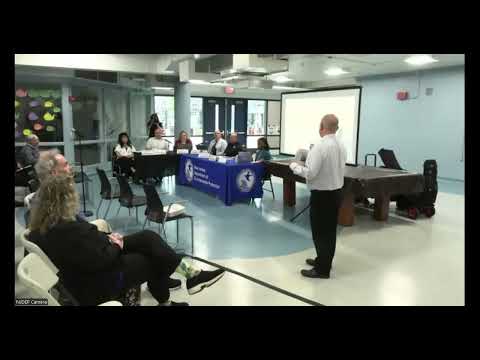
Candice Perry, director of the New Jersey Department of Environmental Protection's Office of Environmental Justice, opened a Spanish-language community session in Elizabeth, saying the department is on a statewide tour to listen to communities most affected by pollution and to use that input to improve permitting and enforcement.
"Queremos escuchar sus perspectivas y sus testimonios," Perry said, framing the meeting as part of DEP's 2026 engagement tour on air quality. The session gathered DEP staff from the Division of Air and enforcement offices and drew a line of questions from residents about monitoring, permits and local health impacts.
DEP staff described the agency's monitoring network and several community-focused efforts. Anseny Carl, chief of the bureau of air quality, said the department operates about 29 monitoring sites with more than 100 real-time analyzers and also runs pilot, hyperlocal monitoring with university partners to collect neighborhood-level data. "Tenemos nuestro proyecto de monitoreo de aire, complementamos nuestro primer ronda de muestreo en Newark ... y en Elizabeth," Carl said, noting both van-based sampling campaigns and community sensor projects.
Officials stressed how the data are used: monitoring can identify cross-border sources, inform enforcement referrals and feed the state's implementation planning. Jeff Myers, who described his role in the northern regional enforcement office, said inspections are scheduled at intervals from one to five years depending on facility type and that the department can pursue administrative penalties and court action when necessary.
The panel also highlighted programs aimed at reducing transportation-related pollution, which staff said accounts for a large share of the state's NOx and carbon emissions. Carl described diesel modernization grants, incentives for electrifying port equipment, funding for electric-bus procurements and a corridor pilot to site charging depots for long-haul trucks.
DEP urged residents to use public comment opportunities and online tools. Staff pointed listeners to a "What's in My Community?" web tool for locating permits, monitors and complaint records and encouraged callers to use the department's 24-hour hotline for odor or smoke incidents so inspectors can collect evidence at the time of occurrence.
Why this matters: DEP said these monitoring and grant programs are designed to give communities data and resources to reduce exposures, but residents at the meeting repeatedly pushed DEP for clearer enforcement outcomes and faster responses where local impacts are severe.
The session closed with staff promising to share slides and follow up on specific neighborhood questions, and speakers reminded attendees to call 1-877-WARN-DEP or email the Office of Environmental Justice for non-emergency concerns.