Get Full Government Meeting Transcripts, Videos, & Alerts Forever!
Get email alerts on the City Budget topic
No spam. Unsubscribe anytime.
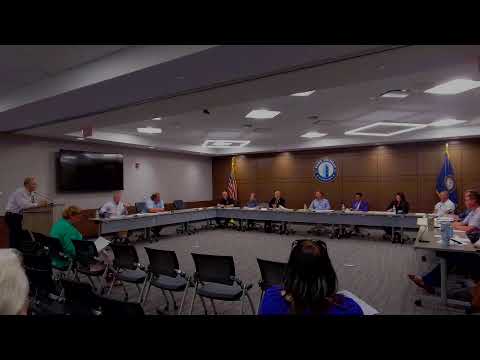
Fort Thomas residents press council on shrinking reserves, accounting and finance staffing
Summary
At a Fort Thomas public hearing, residents challenged city leaders on conservative revenue assumptions, perceived sloppy accounting, the choice to hire a part-time outside CPA instead of a full-time finance director, and recurring capital and road-repair questions; officials said they will provide line-item breakdowns and monthly contractor reports.
Step Jaw, a resident who opened the public hearing, told Fort Thomas officials that the city—udget process appeared designed to undercount revenue and overstate expenses, calling it "an exercise more in numerical based fiction" and urging the council to adopt a clearer method for documenting assumptions and measuring variances.
The hearing focused on several recurring concerns. Residents and some council members pressed staff about a sharp apparent decline in licenses and permits revenue, the treatment of sponsorships and event revenue, a reclassification of large interfund transfers that reduced apparent finance-department expenditures, and whether capital projects such as armory showers remain funded.
Mayor (speaking during the hearing) defended the administration—hoice to contract Money Hoffman Company to provide part-time CPA services instead of immediately hiring a full-time finance director, saying the firm will supply a weekly presence and a monthly letter with reconciliations and explanations. "There's huge savings for the city to provide us," the mayor said, listing avoided salary, pension and healthcare costs as part of the rationale and adding that the arrangement can be revisited if it does not meet needs.
Several residents pushed back. Sharon Macknight, who identified herself and her address at the microphone, said local auditors and interim staff had recommended a full-time in-house finance director for daily oversight, faster monthly reports and better institutional knowledge. "An outside firm can reconcile at month-end, but it's not present for daily activity," she said, urging the council to monitor the contractor's responsiveness and access for residents.
Other notable points raised during public comment and staff responses:
- Sponsorships and event revenue: Council and residents asked why the "merchants and music" revenue line fell toward zero; staff explained some proceeds and sponsorship management were shifted to the Renaissance Board and noted that exclusive vendor arrangements (for example an exclusive pour-rights contract for a beverage vendor) are accounted as revenue rather than donations.
- Transfers and capital accounting: Staff said roughly $1.6M–$1.8M of transfers were moved out of the finance department budgeting lines and now appear as transfers out on the summary page, which reduced department totals but did not cancel planned expenditures.
- Debt and reserves: Staff reported about $8.1M remaining on a 2020 bond issue and said the city currently earns interest on reserves at a rate that makes carrying the bond and maintaining flexibility advantageous; officials said they will seek the new accounting firm's opinion on strategies such as early payoff.
- Historic preservation and consultant fees: A $10,000 line for historic consultant Wes Cunningham drew comment; residents suggested the council consider expanding funding if the consultant will play a larger role protecting historic districts under newly pursued Certified Local Government (CLG) status.
- Streets and jurisdictional repair near the Fort: John Kaufman, a River Road resident, described a recurrent problem at a curve by the Fort where heavy military and commercial vehicles ride up onto the curb because they cannot make the bend; he asked whether the city could budget for a targeted fix and coordinate with state officials about reimbursement or a right-of-entry agreement.
Council and staff committed to follow-ups: to publish a line-item breakdown for event and Renaissance-board spending, post staffing and sponsorship materials to the city website, provide updated classification/pay tables on July 1 as promised, and work with the new outside accounting firm to deliver monthly letters and a clearer audit-driven beginning-balance reconciliation. The public hearing adjourned and the council took a short recess before continuing regular business.