Get Full Government Meeting Transcripts, Videos, & Alerts Forever!
Get email alerts on the Federal Spending Trump Project topic
No spam. Unsubscribe anytime.
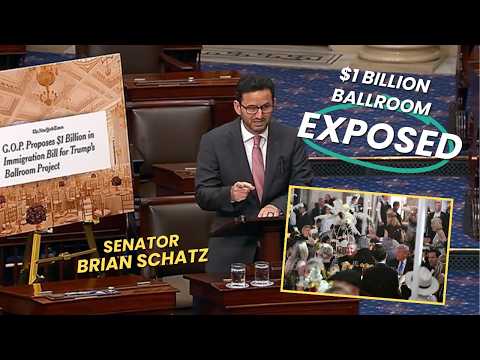
Lawmaker says $1 billion for Trump ballroom would shortchange Hawaii priorities
Summary
A lawmaker on the Senate floor argued that a proposed $1 billion federal allocation to build a ballroom for former President Donald Trump would divert funds from programs such as insulin coverage, child care, and University of Hawaii tuition, and criticized use of reconciliation to push the project and a simultaneous increase in ICE funding.
A lawmaker on the Senate floor criticized a proposed $1 billion federal allocation that the speaker said would finance a ballroom for former President Donald Trump, saying the money could instead fund health care, child care and in-state college tuition in Hawaii.
The lawmaker, who identified themselves as the former top Democrat on the legislative branch appropriation subcommittee, recounted specific alternatives for the $1 billion: covering out-of-pocket insulin costs statewide for almost 20 years, funding healthy meals for women, infants and children for nearly 40 years, paying child care for nearly every child under three in Hawaii for a year, or covering in-state undergraduate tuition at the University of Hawaii for close to a decade.
"This week, Republicans plan to give Donald Trump a billion dollars for, of all things, a ballroom," the lawmaker said, adding that while they support ordinary capital projects such as park repairs and dome restoration, "that's not what this is." The speaker accused the president of seeking monuments to himself rather than policy legacies: "He's single-mindedly focused on building ballrooms and arches and golf courses while the rest of the country struggles to put food on the table or to even see a doctor."
The lawmaker quoted the president's earlier description of the project as "taxpayer free," then said the administration shifted to seeking federal funds after it "lost a court case on the basis that this project was never authorized by Congress." The speaker characterized the administration as now "looking for any statute that they can use to defend themselves in the future."
Using the speech to frame priorities, the lawmaker contrasted the ballroom proposal with everyday economic burdens. They cited national gasoline prices at about $4.53 per gallon and prices of about $5.64 per gallon in Hawaii, and said grocery prices and electricity bills were rising rapidly. "People in Hawaii and all across the country are struggling just to get by," the lawmaker said.
The speaker also blamed recent policy choices for worsening health-care access, saying more than 900 hospitals, nursing homes and other facilities are at risk or have reduced services because Republicans "gutted health care last year," and asserting that one in five Americans who previously used the ACA marketplace no longer have coverage. Those statements were presented as the lawmaker's assessment of recent policy effects.
The speech explained the budget process called reconciliation, a twice-yearly procedure that allows budgetary measures to pass without the 60-vote threshold, and the lawmaker urged that such a "golden ticket" be used to address health care, fuel and food costs rather than the ballroom project. "They are using this golden ticket... to increase funding for ICE at nearly four times their normal levels and give the president a ballroom," the lawmaker said.
The lawmaker concluded by saying the bill under consideration would not deliver tangible relief to struggling Americans and suggested colleagues were voting for the project out of political loyalty to the president rather than because it served broader public needs. The speaker said the measure was expected to be voted on imminently.
The speech did not identify the bill by public law number or provide a specific court-case citation; those details were described by the speaker as "not specified."