Get Full Government Meeting Transcripts, Videos, & Alerts Forever!
Get email alerts on the Electric School Buses National topic
No spam. Unsubscribe anytime.
Experts: Utility coordination and depot readiness are the biggest barriers to school bus electrification
Summary
National experts told a Prince George’s County Public Schools focus group that nearly 14,000 electric school buses are committed nationwide but implementation problems — especially utility coordination, depot upgrades and uncertain funding — are slowing deployments.
National experts told the Prince George’s County Public Schools electric school bus focus workgroup on May 13 that the transition from diesel to electric buses has moved from ambitious commitments to a difficult implementation phase driven by utilities, depot readiness and uneven funding.
"Currently there are almost 14,000 electric school buses committed, procured, delivered or in operation as of July 2025," said Britney Barrett, deputy director for implementation operations at the World Resources Institute, who led the national presentation. She said those buses are spread across about 1,500 school districts and private fleets, and 36% are in districts with the highest shares of low-income households.
Barrett told the workgroup that a common pattern is buses arriving before charging infrastructure is ready. "We see very frequently that buses arrive before the charging infrastructure has been put in," she said, and that utilities frequently determine deployment timelines. "Utility coordination overall is the number one concern that we hear from school districts across the U.S.," she added.
Panelists also raised funding uncertainty at federal and program levels. Barrett described the U.S. Environmental Protection Agency’s Clean School Bus program as a continuing but uneven source of funding, noting an EPA request for information and an expected announcement; Tish Tablin of Generation 180 and Sarah Stalup Jones of CalStart added that operators and contractors have adjusted procurement plans in response to uncertain funding flows.
Experts warned districts to treat interim choices — such as propane buses or mobile charging leases — as bridges, not replacements. Barrett said propane can reduce greenhouse gases relative to some diesel fleets but is "not lower and not anywhere close on NOx, sulfur dioxide, particulate matter" and other locally harmful pollutants. Tish Tablin pointed to contractor First Student’s public response to the EPA RFI as evidence that some large contractors are no longer pursuing new propane deployments.
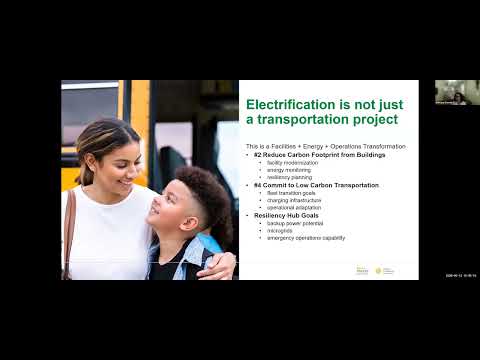
Speakers recommended phase deployments, early utility engagement, and cross-department planning. They urged districts to include facilities, IT, finance and procurement teams early in fleet transition planning and to invest in depot readiness — for example, running conduit during other site work to avoid future trenching costs.
The workgroup reserved several questions for the state presenters and the Atlanta case study, but the national panel’s central message was consistent: commitments and procurements are growing, but moving from commitment to reliable operation requires early, coordinated investment in site infrastructure and utility partnerships.