Get Full Government Meeting Transcripts, Videos, & Alerts Forever!
Get email alerts on the Data Centers topic
No spam. Unsubscribe anytime.
Knox County sends data-center zoning request to planning after hours of public concern
Summary
Following public comments about energy, water and neighborhood impacts, the Knox County Commission voted to send a request to the county planning commission asking staff to draft zoning rules for data centers and accessory uses, removing a draft exhibit so planning can convene utilities and other stakeholders.
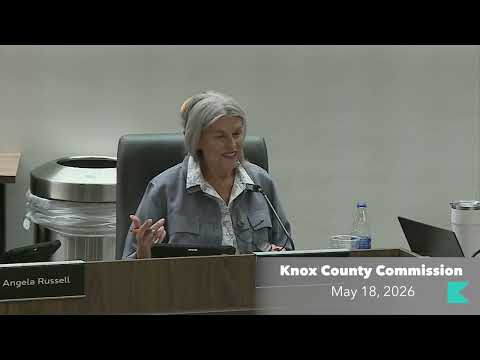
Knox County commissioners voted May 18 to ask the Knoxville-Knox County Planning Commission to develop zoning standards for data centers and their accessory uses after extended public comment and technical presentations from local utilities.
The commission's action referred the matter to planning "clean" (without the attached draft exhibit) so planning staff can gather technical partners including utility providers and telecom firms before recommending precise ordinance language. Chair Gina Oster announced the referral after a long debate that included input from KUB and a string of residents who urged stricter local limits on large facilities.
Why it matters: Residents and several commissioners said large data centers can strain local electricity and water systems and change local tax and development dynamics. Supporters of careful rules said planning staff should include KUB, LCUB, TVA-system reviewers and communications carriers when developing any ordinance.
KUB vice president Aaron Gil told commissioners KUB requires large new users to fund necessary infrastructure upgrades up front, and that contractual terms such as interruptibility are an important way to protect other customers. "It paid upfront as well as all of our data centers paid upfront for any infrastructure upgrades that they need," Gil said, describing existing contractual safeguards and noting some local centers are already large users.
Public commenters pushed for stricter limits. "These parasitical bohemoths not only drastically increase energy and water utility cost for people living around them, but they cause bodily harm, too," said Chris Treadwell, a Knox County resident who urged a restriction on capacity and clearer water- and energy-use rules.
Where the commission landed: Commissioner Jay moved to send the request to planning without the draft exhibit; several commissioners said sending a clean referral would let planning convene all technical parties and develop multiple options. The substitute motion to remove the exhibit and refer the matter passed by recorded vote; one commissioner recused due to a stated conflict.
What happens next: Planning staff will add the item to their work program, research utilities and land-use options, and return recommendations to the commission. Commissioners asked for community engagement and technical input on siting, scale, water use, visual buffers and emergency-interrupt provisions.
Quote: "When users go off-grid...you often see those data centers utilizing diesel or gas generators...Those typically come with significant noise and additional pollution needs," Aaron Gil said, arguing a utility connection with contractual protections can reduce community harm.
The commission's referral is procedural: it starts the planning review process rather than imposing a new county law. Planning's review timeline will determine whether the commission considers an ordinance or a set of amendments in coming months.