Get Full Government Meeting Transcripts, Videos, & Alerts Forever!
Get email alerts on the Public Health topic
No spam. Unsubscribe anytime.
County health educator outlines rural‑welcome lessons, reaccreditation plans
Summary
McLeod County health educator Carrie Ward reported on a Rural Welcoming Gathering in Emporia, Kan., saying the county will emphasize resident engagement, partnerships across 'health in all policies,' and capacity building for reaccreditation.
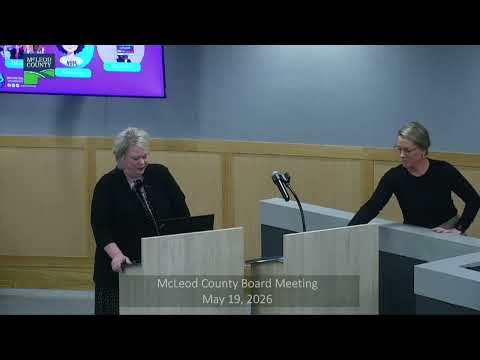
Carrie Ward, a health educator with McLeod County Health and Human Services, told the county board on May 19 that a recent Rural Welcoming Gathering in Emporia, Kansas, highlighted approaches the county can apply as it prepares for reaccreditation and community health improvement planning.
Ward said the conference — a small, multi‑state meeting of municipal and nonprofit public‑health practitioners — reinforced the importance of resident engagement, cross‑sector partnerships and programs that build social connectedness. "The biggest barrier is after COVID...loneliness and that lack of social connectedness contribute to mental‑health concerns," Ward told commissioners.
Why it matters: McLeod County participates in a three‑county community health board that is pursuing reaccreditation. Ward said the reaccreditation process emphasizes outside partnerships and stakeholder documentation; lessons from the gathering will inform the county’s community health assessment and a four‑year improvement plan.
Ward described practical program ideas borrowed from peer counties: community cooking classes, pop‑up family events, stronger farmers‑market collaborations, workforce development support, adult‑education partnerships (including libraries as community connectors), and expanded youth and parenting programming. She said the county’s work on cannabis/substance‑use prevention and school‑based services will also benefit from shared models.
Ward estimated the county‑based share of her time at roughly one‑third, with the remaining two‑thirds devoted to three‑county duties including reaccreditation coordination, workforce development and program delivery. Commissioners praised the outreach and asked Ward to share contacts made at the conference with county staff and partners.
Next step: Ward said county staff working on the community health assessment will incorporate the conference findings into the community health improvement planning cycle.