Get Full Government Meeting Transcripts, Videos, & Alerts Forever!
Get email alerts on the Municipal Budget Places Of Eating Tax topic
No spam. Unsubscribe anytime.
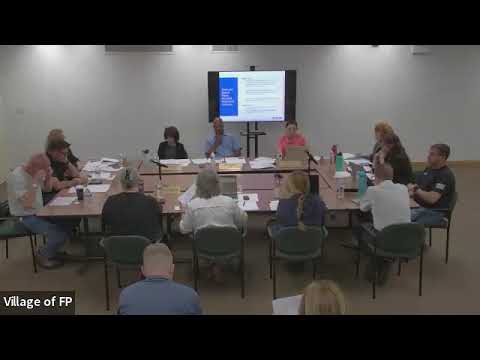
Forest Park council weighs places‑of‑eating tax as pensions, public safety and capital needs strain budget
Summary
At a workshop on the FY2027 budget, council members and staff reviewed a projected general‑fund shortfall, underfunded public safety pensions, and a proposal to implement a 1%–2% places‑of‑eating tax; business owners warned of harm to small restaurants while first‑responder representatives urged new revenue to shore up staffing and pensions.
Forest Park officials on a budget‑workshop night outlined a projected fiscal gap heading into fiscal 2027 and discussed revenue options, chief among them a proposed places‑of‑eating tax that staff estimated could raise about $500,000 at 1% or roughly $1 million at 2%.
The presentation from staff summarized FY2026 as ‘‘close to budget’’ on revenues but flagged a continuing operating deficit after transfers that leaves the general fund projected to end the year in the red. Staff and a Moody's review cited long‑running underfunding of police and fire pensions as a driver of the deficit and recommended expanding the revenue base and balancing operations.
Why it matters: Council members said the village faces persistent operating deficits, rising fixed costs including health insurance and pensions, aging infrastructure, and immediate capital needs — ranging from water‑main work and lead service line replacements to IT and dispatch upgrades — all of which compete for limited funds.
Staff recommended additional study and outreach rather than immediate adoption. The places‑of‑eating tax, authorized under the Illinois Municipal Code and administered through the Illinois Department of Revenue, would apply to retail prepared‑food sales; staff noted a state owner commission to offset filing burdens and described registration, enforcement and filing procedures that municipalities follow.
Supporters of new revenue said the village has limited options. During the meeting a council member summarized outreach to first responders and shared a union message from Sergeant Brendan Riley saying, “It is no secret that it has been a struggle to fund the police and fire pensions,” and that the Forest Park Police Department “support[s] those efforts” to explore new revenue. Firefighters and the police pension board warned that long response‑volume increases and current staffing levels risk safety and higher long‑term costs if disability or turnover rises. Fire union president Travis Myers told the council the department has seen calls rise from about 2,953 in 2011 to 4,742 last year and said, “Our staffing model hasn't changed since 2004. We're running 60% more calls with the same firefighters.”
Local restaurant operators pushed back, saying the tax would worsen already tight margins and could drive customers or new businesses away. Joe Sullivan, owner of Duffy’s Tavern, told the council he expects municipal leaders to involve business owners ‘‘in some kind of partnership discussion’’ and warned of unintended consequences for restaurants that already face rising costs. Brad Wall of Junction Diner said he opposed 2%, arguing that small operators do not have the same capacity as national chains to absorb new costs.
Council members debated approach and timing. Several said outreach and a clear fact sheet for businesses are prerequisites; others argued a modest initial rate (1%) with the ability to increase later was a practical path. Staff noted the village also has potential state‑level revenue opportunities: the recently enacted transit consolidation bill (described in the meeting as Senate Bill 2111) creates a mechanism for municipalities to seek CTA‑site reimbursement through the new Northern Illinois Transit Authority; staff gave an early, conservative estimate that fire‑department reimbursements could be “north of $650,000” but cautioned amounts and implementation remain to be worked out.
Other revenue measures discussed included short‑term rental licensing or taxes (which, if treated as a municipal hotel tax, would be restricted to tourism‑related expenditures), continued pursuit of grants, possible home‑rule discussions in the long term, and sale or redevelopment of the Altonheim site as a one‑time revenue source.
What was decided: the council did not adopt a tax at the meeting. Members asked staff to prepare an outreach and information package for businesses, to detail administrative costs and implementation options (including estimated revenue at 1% vs. 2%), and to return for another budget meeting to consider next steps and any appropriation timing. A motion to proceed with follow‑up was made and seconded; the motion text and formal vote were not recorded in the transcript.
The council also heard numerous public comments: business owners urged careful vetting to avoid hurting small establishments; firefighters urged fast action to shore up staffing and pensions; and several residents recommended pursuing state reimbursement options tied to CTA response costs. The council closed the public comment period and scheduled further work and outreach before any ordinance drafting or vote.
Next steps: staff will draft materials for outreach to food‑service businesses, refine revenue projections, pursue clarification on CTA/NITA reimbursement mechanisms with legislators and the state, and bring more detailed budget drafts and policy choices to a subsequent meeting so the council can decide whether to proceed with an ordinance or alternative revenue measures.