Get Full Government Meeting Transcripts, Videos, & Alerts Forever!
Get email alerts on the Physician Licensure topic
No spam. Unsubscribe anytime.
Legislature debates Bill 302-38 to tighten oversight of internationally trained physicians after concerns about Public Law 38-107
Summary
Lawmakers advanced Bill 302-38 to revise elements of Public Law 38-107, adding specialty-specific supervision, ongoing assessments and expanded practice settings — a package supporters say strengthens patient safety while some opponents say it risks slowing physician recruitment for public facilities.
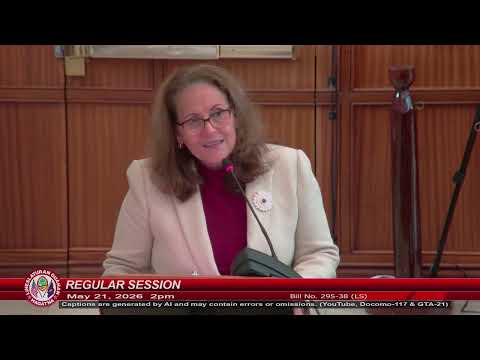
Sponsor Sen. Salis Batani presented Bill 302-38 as a corrective to issues that emerged after Public Law 38-107, saying the measure strengthens supervision and ongoing competency assessment for internationally trained physicians (ITP) and specifies that supervising physicians must be Guam-licensed, board-certified clinicians in the same specialty. The sponsor described the intent as preserving patient safety while increasing access to care by making both government and private facilities eligible under clearer standards.
Supporters from both sides of the aisle told the floor they had consulted hospitals, clinics and the Guam Board of Medical Examiners; the sponsor said some amendments came directly from conversations with Guam Regional Medical City, clinics and physicians. The bill would require foreign-trained physicians admitted under a provisional pathway to pass licensing exams (USMLE noted on the floor) and to practice under specialty-specific supervision with ongoing monitoring and reporting to regulators.
Opponents said Public Law 38-107 originally created two distinct pathways — a government-based internationally trained practitioners (ITP) route meant for public hospitals and a foreign medical graduate (FMG) pathway for private practice — and argued that restricting or adding new requirements to the ITP route could discourage physicians from coming to Guam and would undermine access for medically underserved public patients. Multiple speakers referenced testimony from Dr. Nathaniel Berg and other clinicians who warned against moving too quickly from a government pilot to a broader private-sector rollout without sufficient monitoring data.
Supporters countered that the bill does not close pathways but strengthens supervision, assessment and enforcement tools to protect patients, and that private facilities can and do maintain rigorous oversight. After extended debate over process and consultation, the sponsor moved Bill 302-38 to third reading; the motion passed by voice/hand indication and the bill was placed on the legislature’s voting calendar for the next session day.
The transcript records no roll-call vote on the motion; several speakers called for further collaboration with medical stakeholders during implementation rulemaking.