Get Full Government Meeting Transcripts, Videos, & Alerts Forever!
Get email alerts on the Ofcc Timeline topic
No spam. Unsubscribe anytime.
Bethel Local board warned a timely OFCC notice is needed to stay on schedule for the co‑funded high school project
Summary
Board reviewed the OFCC approval steps, the 120‑day local action window after certification and the possibility of a special June meeting if the notice of recommendation for conditional approval (NOA) arrives after June 12. The board also discussed architect selection and hiring an owner's representative to protect district interests.
Bethel Local school board members were told that the district’s schedule for the co‑funded high school project depends on a pending notice from the Ohio Facilities Construction Commission (OFCC) and that the board may need a special June meeting if the commission’s notice arrives after a June 12 pacing deadline. Staff described the NOA as the OFCC’s notice of recommendation for conditional approval and said subsequent state certification and appropriation steps must occur before certain co‑funded work can proceed.
At the meeting staff walked the board through the approval sequence: OFCC issues a notice of recommendation for conditional approval, the commission’s controlling board must appropriate funds, and then the district typically has about 120 days after certification to approve the formal documents required to begin co‑funded work. Because the district’s regular board calendar does not include a meeting between the expected timing and June 12, staff warned a special meeting could be required to approve the NOA and any authorizing actions within the 120‑day window.
Board members also discussed the district’s approach to procurement and project oversight. Staff said the selection of an architect is a co‑selection process involving both the district and OFCC; architects may be shortlisted and interviewed in the summer, and the selection timeline is driven in part by OFCC’s rubric. For construction procurement, staff said the district will likely use a CMR (construction manager at risk) or best‑value process where experience and fit are heavily weighed alongside price.
The board spent significant time on whether to hire an owner’s representative — an independent consultant to provide day‑to‑day oversight, review change orders and represent the board’s interests on site. Staff described the owner’s rep as a contract role (not an employee) that would report to the board; one example contract figure cited during discussion was roughly $95,000. Board members debated hiring an individual consultant versus contracting with a firm and emphasized the importance of finding someone collaborative and local enough to be on site when needed.
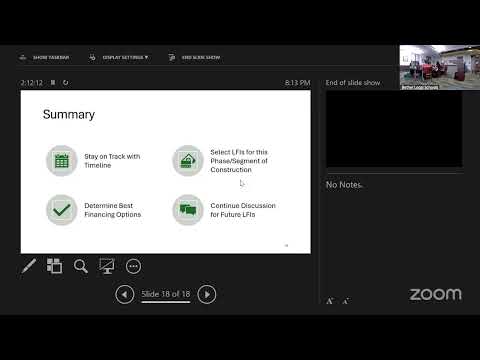
Staff emphasized that many programmatic and design decisions (classroom counts, special spaces and LFI decisions) will be refined after architect selection. The board asked staff to be prepared for a quick turnaround if the OFCC NOA arrives near the June 12 threshold. No final procurement actions or contract awards were approved at the meeting; staff said they will return with recommended procurement language and timelines once the NOA and OFCC certification steps are confirmed.