Get Full Government Meeting Transcripts, Videos, & Alerts Forever!
Get email alerts on the Long Lake topic
No spam. Unsubscribe anytime.
Long Lake shortfall looms as county weighs repairs, trust funds and possible subsidy
Summary
County staff reported Long Lake Conservation Center is operating with a negative operating cash position (roughly negative $893,000 excluding trust and rental earmarks) and discussed options including facilities assessment, grants, foundation support, use of trust/rental funds and potential county subsidy through levy decisions.
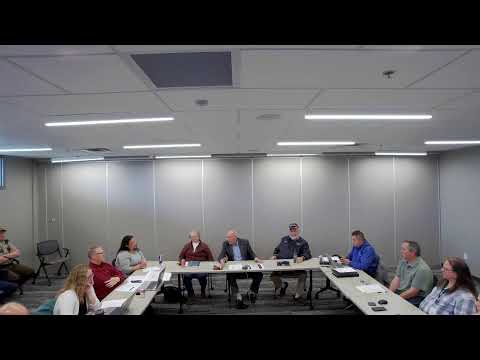
Participants spent an extended portion of the meeting on Long Lake Conservation Center, a county‑owned facility that historically relied on school‑group revenue, foundation donations and trust funds for operating and capital costs. Staff said the Long Lake operating fund had a negative $42,000 cash balance at the end of April and that, when trust and rental earmarks are removed, the operating cash position is roughly negative $893,000.
Auditor Kathleen and county staff described Long Lake's current approach to capital work as reactive: "Our capital improvement plan at Long Lake ... is to fix what's breaking because that's all you're lucky to afford," staff said, and they urged a comprehensive facilities assessment to inventory building needs, cost projects and create a multi‑year prioritized CIP suitable for grants or bonding applications. Staff estimated a facilities assessment could cost roughly $15,000–$20,000 and could produce a spreadsheet that maps each building's needs to a year and dollar estimate to improve grant competitiveness.
Commissioners pushed on responsibility and funding. One commissioner emphasized that although the Long Lake foundation raises money, "we own the property. We need to maintain the facilities," and asked whether capital responsibility rests with the county's levy or the foundation. Staff replied the facility is owned by the county, has not received county levy dollars since before 2019, and in practice Long Lake has operated largely on school revenues (reported at roughly $700k–$800k annually) and modest foundation contributions (historically $20k–$30k per year).
Options discussed included (a) convening a facilities assessment to produce a prioritized and costed CIP, (b) seeking grants, bonding or increased foundation fundraising for capital projects, (c) considering whether the county will subsidize capital through one‑time use of reserves or levy dollars in future budgets, and (d) exploring asset options such as sale or partial disposition subject to legal constraints and potential distribution of proceeds to other taxing authorities or donor restrictions.
Staff said additional analysis is needed to determine whether Long Lake can be made sustainable on operating revenue alone while also supporting capital improvements; commissioners asked staff to return with clearer cash‑flow projections and CIP cost estimates to inform future levy choices.