Get Full Government Meeting Transcripts, Videos, & Alerts Forever!
Get email alerts on the Environmental Monitoring topic
No spam. Unsubscribe anytime.
SRNL scientists use AI to forecast groundwater plumes and predict equipment maintenance
Summary
Tom Danielson of Savannah River National Laboratory describes how AI and integrated sensors are being used to forecast groundwater-contaminant plumes, detect early geochemical changes and predict equipment maintenance at site facilities—shifting monitoring from reactive sampling to proactive detection.
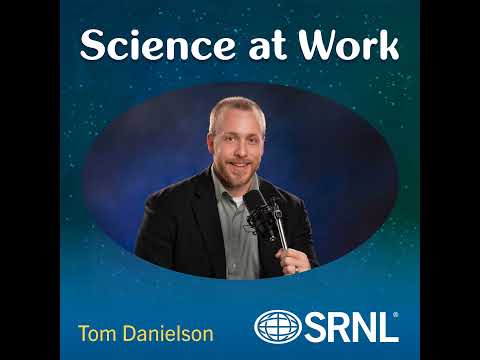
Tom Danielson, applied sensing and data science team lead in the environmental and legacy management directorate at Savannah River National Laboratory, said the lab uses artificial intelligence together with multiple sensor types to forecast groundwater plume migration and catch early changes in site geochemistry.
"We're bringing together multiple different technologies … and ultimately what this is aiming to do is sort of transform the monitoring paradigm," Danielson said, describing a program he called advanced long-term environmental monitoring systems that pairs in-well sensors (pH, specific conductance, water level) and geophysical methods such as electrical resistivity tomography with machine learning models.
Danielson said the combined approach lets staff detect deviations earlier than the traditional field-sample-then-lab workflow. "By using these integrated sensing technologies as well as AI and machine learning, what we can do is forecast the plume migration. We can detect early if there's a change in how the environment and the geochemistry is behaving," he said.
The work builds on SRNL and Department of Energy data assets. Danielson noted that DOE sites have "mountains of very unique data" from decades of operations and process instrumentation, which can be used to develop algorithms that optimize processes and extend beyond government operations to commercial applications.
At operating facilities such as the salt waste processing facility, Danielson said teams apply similar approaches to predict maintenance needs—forecasting degradation in components such as filters to schedule replacements before they lead to failures or costly downtime. "Being able to forecast when you need to change that filter is kind of an important thing," he said.
Danielson cautioned that AI is not a silver bullet. Models depend on data quality and cannot overcome physical throughput limits; understanding and propagating uncertainty in machine-learning predictions remains an active research challenge. He also flagged resource concerns tied to large AI computations, noting ongoing efforts to reduce the energy and water footprint of data centers.
The initiatives Danielson described are being advanced in concert with DOEwide efforts such as the Genesis AI undertaking, a multi-lab collaboration he said involves all 17 national labs. Danielson framed the work as shifting monitoring from reactive detection to proactive forecasting, which he and the host said can reduce cost, speed response and improve safety.
The episode concluded with Danielson noting that monitoring continues for both historical (Cold War-era) legacy operations and current waste processing activities, and that handoffs between environmental and legacy-management offices require continued surveillance of groundwater and environmental systems.