Get Full Government Meeting Transcripts, Videos, & Alerts Forever!
Get email alerts on the Solid Waste Rolloff Policy topic
No spam. Unsubscribe anytime.
Taylor County public input prompts motion to change rolloff ordinance, staff to draft fee tied to building permits
Summary
After extended public comment about contractors and storm debris at county rolloff sites, Commissioner Figel moved to revise the solid‑waste ordinance to accept the materials residents have been using and attach an estimated C&D charge to building permits; commissioners asked staff to return with detailed fee options.
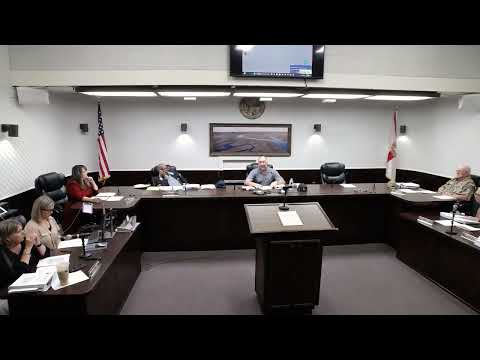
After more than an hour of public comment and commissioner discussion, Taylor County commissioners opened a formal effort to reshape county rules for rolloff sites and construction and demolition (C&D) materials.
Michelle Curtis, a resident of Preston Sheffield Road, asked the board to allow larger storm‑damaged trees at the rolloff sites and to relax the 4‑inch diameter limit that residents said left them with no convenient local disposal option after recent storms. Several other residents told the board they had been turned away inconsistently at different rolloff sites, which they said was driven by staff discretion and unclear policy.
Commissioner Figel framed a proposal as a practical fix: rather than relying solely on attendants to determine whether a load is household yard trash or contractor C&D, the county could continue accepting the materials residents have brought historically while charging an estimated C&D disposal fee at the time a building permit is issued. "Charge for the C and D with the building permit," Figel said, arguing that charging up front would remove the need for attendants to make on‑the‑spot determinations and reduce road trips to the landfill.
Other commissioners and members of the public pressed for implementation details. Speakers discussed alternatives including year‑to‑year colored stickers on vehicles, mandatory cards presented at site attendants, proof of dumpster rental or landfill receipts for contractors, and use of inspectors to verify active dumpsters on-site. Staff noted that incinerator and burn‑site limits (permit windows and machine capacity) constrain how much vegetative debris can be handled on‑site.
The board voted to place a motion on the table directing staff to review the existing solid‑waste ordinance, develop implementation options and cost estimates, and return with recommendations. Commissioner Figel made the motion to "accept what we've been accepting up until now" and to add an additional fee on building permits to cover C&D; the motion was seconded and advanced for further staff work. Commissioners asked staff to bring back more detail (for example, how to estimate C&D fees and how to handle yard‑crew/landscape contractors) at the first meeting in January.
Next steps: staff will review the county's existing ordinance and prepare specific fee options and enforcement mechanisms for board consideration; the board did not adopt an immediate fee schedule at the Dec. 1 meeting.