Get Full Government Meeting Transcripts, Videos, & Alerts Forever!
Get email alerts on the Consumer Protection topic
No spam. Unsubscribe anytime.
Moore County “Scam Jam” urges seniors to adopt ‘zero trust’ for unsolicited calls and messages
Summary
At a Moore County Senior Enrichment Center Scam Jam, SHIP volunteers and the Moore County Sheriff’s Office urged seniors to treat unsolicited calls, texts and DMs as untrusted by default and to verify contacts using official channels. Presenters offered practical steps to spot scams and local reporting resources.
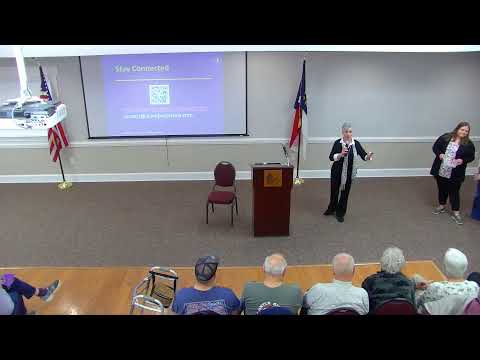
At a Scam Jam at the Moore County Senior Enrichment Center, presenters from the Senior Medicare Patrol and the Moore County Sheriff’s Office urged seniors to adopt a "zero trust" approach to unsolicited phone calls, texts and social-media messages.
"We never trust unsolicited communications. Always verify using a method you control," said JD Woodard, an information-technology professional leading the Scam Busters presentation. Woodard framed the event’s main guidance around a simple workflow: if you did not initiate contact, hang up or close the message and verify through an official phone number or the organization’s website.
Why it matters: speakers said scammers use urgency, secrecy and impersonation to push victims into quick decisions. Stephanie Bias, program coordinator for the Senior Medicare Patrol who works with the North Carolina Department of Insurance SHIP program, told attendees that Medicare will not call to verify personal numbers. "Medicare is not calling you on the phone," she said, urging people to use the number printed on their official Medicare card for any verification.
What presenters recommended: hang up and call the back-of-card number; do not provide personal data, one-time codes or payment via gift cards or crypto; do not click links in unexpected emails or QR codes; and check Medicare Summary Notices regularly. Bias also advised keeping a simple health journal to track visits and tests so beneficiaries can spot erroneous claims. "Open your Medicare summary notices and check them for accuracy," she said, noting the program’s volunteers and a DOI-staffed call center can help beneficiaries with appeals.
Local law enforcement reinforced the practical steps. "If you verify, if you stop and verify, it breaks a whole scam," said Captain Bradley Whitaker of the Moore County Sheriff’s Department, who described local examples of victims pressured to buy green-dot or gift cards and told to keep the calls secret.
Presenters demonstrated concrete examples—bank-text scams that ask recipients to reply, fake PayPal lock emails, jury-duty impersonations and long-term romance or investment cons—and recommended specific behaviors: do not respond on the same channel (the "air gap" rule); when in doubt, contact your financial institution using the phone number on your card; and for in-person marketplace deals, use cash or meet at a police station rather than using peer-to-peer payment apps.
Resources and follow-up: Woodard offered his free newsletter and contact email (scambusterpro.substack.com; contact@scambusterpro.com) and urged attendees to report scams to local law enforcement. Presenters also recommended freezing credit with the three major bureaus as a free preventive measure.
The event closed with door prizes and information tables from community sponsors. Presenters said they plan follow-up talks, including a proposed session on how artificial intelligence is being used in scams.
Next step: attendees were encouraged to sign up for local and national resources mentioned at the meeting and to call their bank or the Department of Insurance if they suspect fraud.