Get Full Government Meeting Transcripts, Videos, & Alerts Forever!
Get email alerts on the Budget Enrollment topic
No spam. Unsubscribe anytime.
Prosser School District budget workshop flags enrollment declines, warns of possible state "binding" oversight
Summary
District staff presented conservative 2026-27 enrollment and revenue projections, proposed budgeting at about 97'98% of revenue to rebuild reserves, and warned the district could enter OSPI binding conditions by August if projections hold.
Prosser School District staff told the board at a budget workshop that conservative enrollment and revenue projections have put pressure on next year's finances and that the district may face state "binding" oversight as soon as August.
Drew, the presenter, said the district is using a budgeting framework modeled in another district and aims to limit spending to roughly 97'98% of projected revenue to begin rebuilding fund balance. "We really want to try to stay at 97 or 98% of our revenue and spending," Drew said, adding that staying conservative on enrollment assumptions reduces the risk of owing money back to the state midyear.
The presentation showed a K-12 baseline of 2,227 students today and a budgeted baseline of 2,153 students for 2026-27, a gap of 74 students. Drew told the board the district's revenue projection for 2026-27 is in the neighborhood of $45 million, down from the current year, and that reductions to LEA (local effort assistance) enhancements and cuts to transitional kindergarten (TK) slots are factors in the shortfall.
Board members pressed for details about how those cuts affect services. Drew explained that per-pupil apportionment is split into different line items and noted the district receives $10,684 per basic-ed student under the presented apportionment model, with a separate special-education allocation that must be tallied to see total funding per special-education student.
A board member summarized the procedural risk plainly: "Everyone needs to be prepared that no later than August, possibly July, we will be in binding conditions," the member said, adding that staff and the board should expect OSPI to require monthly oversight and benchmarks if the district projects a negative ending fund balance.
Drew described options that OSPI and the district may consider under binding conditions, including one-time actions such as selling property and applying proceeds to the general fund or transferring certain capital balances, subject to OSPI approval. He said Benton County has been cooperative in exploring short-term support but emphasized that such measures are limited and generally temporary.
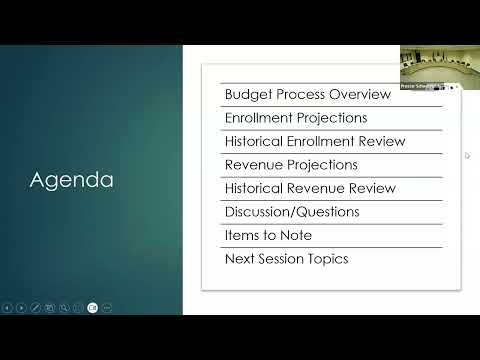
Staff also outlined near-term steps for the board: in June the team will present a more detailed expenditure breakdown (salaries, benefits, materials and operations) and explore vendor and contract savings; the board may hold a budget-extension hearing before the formal budget hearing, with final adoption targeted for the first August meeting. Drew asked board members and the public to submit questions in advance to inform the June work session.
The workshop included program-level clarifications: alternate learning experience (ALE), Running Start and Open Doors enrollments are budgeted differently from basic K-12, and Prosser is preliminarily funded for 47 TK slots next year though allocations can change. Drew said the district will continue to try to code and claim all allowable grant dollars rather than rely on carryover.
No formal policy vote on the budget occurred at the workshop; the board approved the meeting agenda at the start of the session. The board adjourned and scheduled its next regular meeting in the Prosser School District boardroom at 6 p.m. on May 27.