Get Full Government Meeting Transcripts, Videos, & Alerts Forever!
Get email alerts on the Master Plan topic
No spam. Unsubscribe anytime.
Kenilworth planning board pauses master plan adoption after hours of public comment on data center
Summary
At a May 19 special hearing, Kenilworth planners presented the draft 2026 master plan and faced a large public outcry focused on a recently approved AI/data center. Residents urged amendments, cited technical and environmental concerns and the board voted to compile questions and revisit the plan.
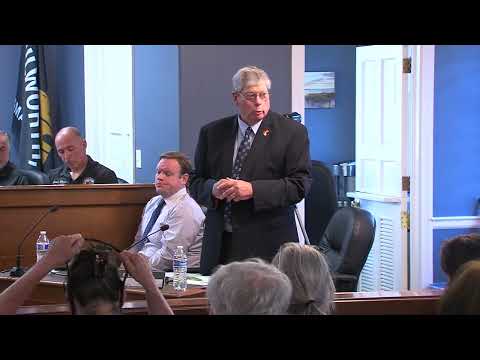
KENILWORTH, N.J. — The Kenilworth Planning Board on May 19 paused further action on the borough’s draft 2026 master plan after an hours‑long public hearing that centered on concerns about a large AI/data center already approved and under construction on the Galloping Hill Technology Campus.
Kevin O’Brien, the borough planner who presented the draft, told the board the master plan updates land‑use direction, replaces an older office‑research zone with an “innovation zone,” and folds gateway and landscaping standards into underlying zoning. “Between us, we have 70 years of municipal, planning, and state experience,” O’Brien said as he outlined goals including neighborhood preservation, boulevard revitalization and climate resilience.
Residents, however, said the master plan fails to describe the scale and operational intensity of the data‑center development. Danielle Palmie, who introduced a coordinated resident statement, said the land‑use element does not reference the site’s “280,000 square foot building converted to a 24/7 industrial energy use, 250 megawatts of electrical load, 50,000 square foot exterior chiller yard, [and] 31 diesel generators on concrete pads.” Palmie added, “None of that appears in the land use plan element.”
Speakers read from planning and engineering records tied to the CoreWeave (referred to in the record as Core Weave/CoreWeave) site review. Adam Tomasik and others quoted an engineering review letter dated May 8, 2025 that they said listed more than 30 technical deficiencies the week before the board’s May 15 approval. Tiffany Haltom read from a geotechnical study finalized May 12, 2025, saying it performed no environmental sampling, cited the wrong county soil survey and noted parts of the site lie in the FEMA 100‑year floodplain.
Several residents raised environmental justice, water and energy concerns. “New Jersey is in a drought right now,” said Imani Dan Burton, environmental justice director for Climate Revolution Action Network. Burton urged the board to consider whether a high‑load data center fits the borough’s resiliency goals. Other speakers warned of local examples where large data centers have been linked to lower water pressure, persistent noise and higher regional electricity prices.
Multiple residents asked the board to amend the land‑use element to: bar data centers as a permitted principal use going forward on borough lands; require any expansion of the existing facility to be treated as a use‑variance with full notice and master‑plan consistency review; and require future subdivisions or site plans on the newly created parcels to meet the master plan’s performance and resilience standards before approval.
Board procedure limited direct responses during the hearing. The chair said staff were taking notes and would compile the public’s “legitimate questions” for the board’s committee to review with the planners. After a short recess the board voted to close public comment and moved to have the committee collect and forward questions to the professionals for follow‑up; a return meeting was suggested for June. “We heard you,” the chair said, describing the next steps as compiling questions, asking the professionals to respond and reconvening the committee as needed.
What the board did not do at the meeting was reverse or rescind the May planning approvals tied to the data‑center applications that speakers complained about; board members said those applications are separate from master‑plan adoption and are handled through site‑plan/subdivision procedures and other hearings. The board also acknowledged it must re‑notice any formal follow‑up meeting.
The board’s stated next procedural step is to compile the written questions from tonight’s hearing, circulate them to the planning professionals (Kevin O’Brien and Adam Bradford) and schedule follow‑up committee meetings to determine whether edits to the draft master plan are warranted. The public was told it will be notified of any further meetings.