Get Full Government Meeting Transcripts, Videos, & Alerts Forever!
Get email alerts on the Un Budget Impact topic
No spam. Unsubscribe anytime.
Guterrez: U.S. arrears forced UN to shrink operations, hurting vulnerable populations
Summary
Secretary-General Gutierrez said unpaid U.S. contributions left the UN with more than $3 billion in arrears across peacekeeping and regular budgets, prompting staff and troop reductions that reduced humanitarian assistance.
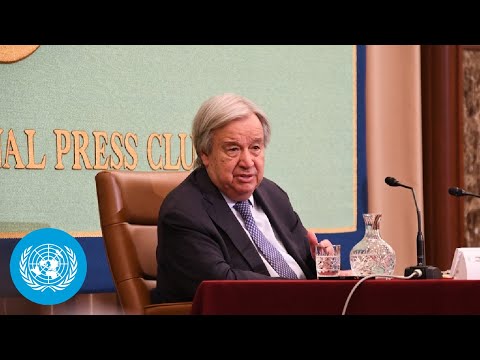
Secretary-General Gutierrez told reporters in Tokyo that arrears in member-state payments have had concrete humanitarian consequences, saying that when money did not arrive the UN "had to shrink" operations and that "the price was largely paid by those that received assistance." He said that counting both peacekeeping and regular budgets, arrears exceeded $3,000,000,000 and that regular-budget arrears were "1,000,000,000 something dollars."
Gutierrez said the organization had been forced to reduce the size of the secretariat and to plan peacekeeping troop reductions when large anticipated contributions failed to materialize. He stated that the 2026 budget cuts reduced 22% of secretariat posts and that peacekeeping troop numbers were reduced by 25% when U.S. payments were uncertain, describing those choices as planned but painful.
Asked whether Japan or China would be asked to fill the gap, Gutierrez said he would not ask them to "pay the American quota" and insisted instead that the United States "pay what is due to the UN." He emphasized that the lack of funds translated into "more hunger, fewer vaccinations, and less support to water and sanitation," and said those consequences were borne by the people the UN serves.
Gutierrez framed the cuts as evidence of the UN's ability to reform and adapt while cautioning that program reductions and staff cuts had real humanitarian costs. He said some agencies were forced to shrink but the system did not collapse, describing a trade-off between institutional resilience and reduced services to vulnerable populations.