Get Full Government Meeting Transcripts, Videos, & Alerts Forever!
Get email alerts on the Compensation topic
No spam. Unsubscribe anytime.
Board rejects proposed 2026'027 compensation plan after trustees raise concerns about support staff pay
Summary
Administrators proposed a 1% across'the'board pay increase with pay'range compression and principal standalone pay; trustees debated market competitiveness for support staff and whether the district should prioritize lower'paid roles. The motion failed and the item will be revisited at a special meeting.
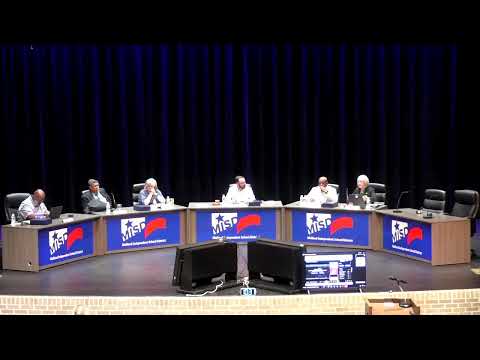
Administrators presented a new compensation manual for 2026'7 that would compress pay ranges, make principals a standalone pay group, and provide a recommended 1% increase for all employees at an estimated cost of $1.76 million. The board debated the proposal on May 19 and the measure failed in a recorded vote.
Miss Garcia, presenting the plan, said the district had worked to comply with House Bill 2 requirements and to make pay more competitive for mid'career teachers: "To put this information into context... in 2026'27, that same teacher will be making $69,42, a difference of $6,952 in that time since 2023'24," she said. The recommendation to the board was a 1% increase for all employees, funded and accounted for in the budget update.
Several trustees said the plan did not do enough for lower'paid support staff, citing the difficulty of recruiting custodians, bus drivers and paraprofessionals on minimum hourly wages. "I just don't know how you could make it on $20,000 a year," one trustee said during debate. Trustees asked administration for staff'level averages and alternatives that would better target low'paid positions. Some trustees supported the plan as fiscally cautious given uncertain revenues; others said the board should prioritize livable wages for hourly employees.
After discussion, the motion to approve the compensation manual failed in a board vote (the meeting record shows the motion did not secure a majority). Administration said the proposal will be returned for further consideration at a scheduled special meeting.
Why this matters: Compensation is the district's largest recurring cost and is central to recruitment and retention of teachers, specialists and critical support staff. The vote reflects board divisions on how to distribute limited resources and whether to allocate a broader, modest raise or to target larger increases to lower'paid roles.
What to watch for: A revised proposal at a June special meeting and any short'term retention incentives or targeted supplements the board might adopt for pressing recruitment needs.