Get Full Government Meeting Transcripts, Videos, & Alerts Forever!
Get email alerts on the Employee Benefits topic
No spam. Unsubscribe anytime.
Midland ISD faces sharp rise in medical claims; administrators propose moving surplus and investigating freestanding ER billing
Summary
District staff told trustees a spike in self-funded medical and pharmacy claims has created a projected $1.7 million deficit in the employee medical plan; staff proposed moving $2 million of general fund surplus to shore up reserves and exploring a one-time retention incentive. Trustees raised concerns about freestanding ER billing practices and possible Stark law violations and said they will investigate.
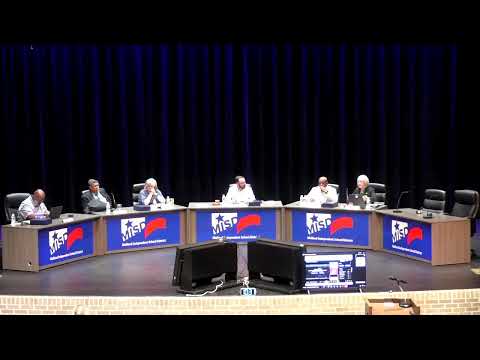
Midland ISD finance staff told the Board of Trustees on May 19 that the district's self-funded medical insurance plan has experienced a sharp increase in costly claims and freestanding emergency room billing, creating a projected $1.7 million deficit for 2026'7.
Chief financial staff described the plan and causes: "The district is a self-funded medical insurance meaning the district assumes all financial risk and pays actual cost of employees and dependent medical claims," the presentation said, noting rising freestanding ER utilization and high-cost claimants as primary drivers.
Mr. Durham recommended several steps to stabilize the fund, including moving $2 million of the projected general-fund surplus into the self-funded medical insurance fund to increase reserves and proposing a one-time retention incentive to be funded from surplus. "My first recommendation is going to be to move $2 million of the projected surplus to the self-funded medical insurance to reduce the amount of fund balance used," Mr. Durham said.
Trustees pressed for additional detail. Dr. Freeze said his board information request found a freestanding urgent-care/ER provider with unusually large bills and suspected the clinic was regularly waving co-pays and passing those costs to the district's insurer, inflating premiums. "I have some serious concerns that we may be dealing with some Stark law violations including possible kickbacks or inducements," Dr. Freeze said, and said he would investigate and publish findings.
Staff said they have opened discussions with Blue Cross Blue Shield and sent certified letters to Signature Care; the presentation also showed estimated comparative costs (primary care $100'$250; urgent care $150'$500; freestanding ER often $3,000'$10,000+ for nonemergent conditions). The administration said the district will increase employee outreach about in-network clinics and that more information on claim counts (including a specific provider's visit counts and dollar totals) had already been supplied to trustees.
Why this matters: For a self-funded plan, high-cost claims and billing practices by third-party clinics can materially affect district finances and the premiums employees pay. Trustees expressed that improper waiver of co-pays by outside clinics could be accelerating plan losses and asked administration to pursue both enforcement and data analysis.
What to watch for: Any formal investigation into provider billing practices, updates to district communications or provider networks, and whether the board approves moving general-fund surplus into the insurance fund or adopts any additional employee cost controls.