Get Full Government Meeting Transcripts, Videos, & Alerts Forever!
Get email alerts on the Annual Financial Report topic
No spam. Unsubscribe anytime.
Finance committee reviews FY2023-24 annual financial report; per-pupil costs rise while long-term debt falls
Summary
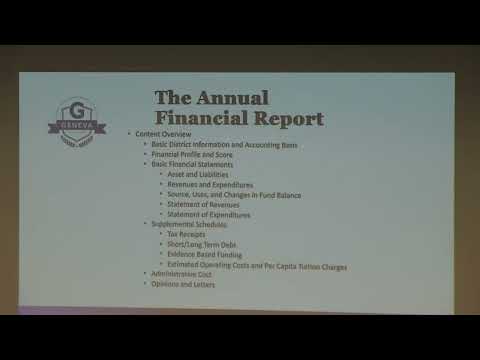
At its Jan. 13 finance committee meeting, Geneva CUSD 304 staff summarized the FY2023-24 annual financial report: district revenue rose to about $119 million, per-student spending increased to roughly $38,768, and long-term debt declined toward $85 million; staff offered follow-up comparisons and data.
Geneva CUSD 304's Board of Education finance committee reviewed the district's fiscal year 2023-24 annual financial report at its Jan. 13 meeting and heard staff describe revenue gains alongside rising per-student spending and declining long-term debt.
Doctor Baird, speaking to the committee, said the AFR and related reports give external reviewers and the community a consolidated view of district revenues and expenditures. He noted the district converts financials to an accrual basis for audit and that auditors conduct on-site field work and random sampling to confirm fiscal records.
The report showed several year-over-year shifts. Doctor Baird said total district revenue increased from about $113 million to roughly $119 million, driven in part by higher property valuations and rebounds in registration and food-service revenues as pandemic-era disruptions receded. At the same time, he said instruction costs rose to about $18,818 per student and facility costs to about $19,949, increasing combined per-pupil spending from $37,252 to about $38,768.
Why it matters: the committee plans and oversight depend on understanding both revenue sources and the drivers of rising costs. Doctor Baird linked the district's financial-recognition score (3.9) to its long-term debt position and noted that bond retirements are moving that metric in a positive direction.
Doctor Baird also summarized expenditure trends: increases in salaries, substitutes and overtime; higher benefits costs driven by insurance market changes; growth in purchase services such as food service and software; and one-time capital investments. He highlighted that capital-project spending rose markedly (from about $2.4 million to $9.9 million) because of planned facility improvements and life-safety projects.
Committee members asked whether auditors compare Geneva's AFR and per-pupil figures to nearby districts. Doctor Baird said he does not run full comparative reports by default but can pull AFRs and selected comparative metrics (teachers, ELL, special education, or per-pupil spending) and return with targeted comparisons.
The AFR discussion included several operational notes: the district has used federal CARES/ARP funds and those reports will phase out; transportation fee revenue returned as bus capacity and pay-to-ride recovered; and projected offsets and fund balances remain areas the committee will monitor.
The committee did not take action on the AFR at this meeting; members asked staff for comparative data and clarifications to inform future oversight.
Ending: Doctor Baird closed his presentation and answered committee questions; the meeting then moved on to consideration of the technology capital plan.