Get Full Government Meeting Transcripts, Videos, & Alerts Forever!
Get email alerts on the Property Sale topic
No spam. Unsubscribe anytime.
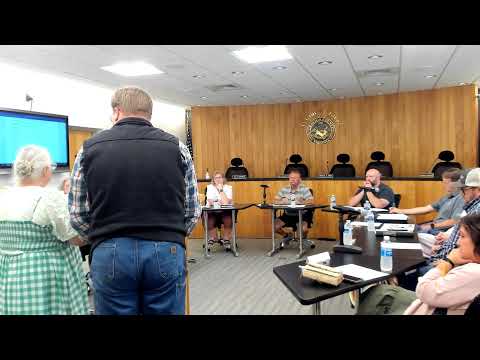
Grayson County board weighs sale of former Roundhouse property, conservation easement and residential recovery proposal
Summary
Board members asked New River Conservancy for a formal proposal on a potential conservation easement for the former Roundhouse property and heard presenters propose using the site for a one-year residential recovery program for court-ordered participants; no sale decision was made and the board entered a closed session to discuss prospective business.
The Grayson County board discussed next steps for the former Roundhouse property on a motion to consider whether to sell or pursue alternatives, including a conservation easement, and heard a presentation proposing a residential recovery program for men.
Why it matters: Board members said they want a clear proposal from the New River Conservancy (or a similar nonprofit) before deciding whether to sell, gift or otherwise market the property. Presenters also asked the board to consider using the site for a court-ordered, residential recovery program that would require building rehabilitation and operational plans.
During the meeting, a board member raised whether the board intended to sell the property or pursue other options. Staff described previous contact with New River Conservancy and said the conservancy indicated it could pursue conservation tools — including placing an easement that would limit development rights and run with the deed — or pursue stream-restoration work along a creek on the site. Staff explained that conservation easements are customizable, restrict future development (number of structures, lot divisions), and can be coupled with tax-credit mechanisms that generate funds for the landowner.
Several members said they did not want to finalize a sale without first seeing a formal, written proposal from any interested conservation group. "I would like to hear what he had to say before we go through those steps," one member said, urging a conversation and disclosure of any easement intent to potential buyers.
The board also heard from presenters introduced at the meeting as Cheyenne Johnson and Rita Goodson (the record does not clearly attribute which presenter spoke each line). A presenter described a plan to run a roughly one-year residential recovery program for men, including court-ordered placements, on the property. Presenters said the program would emphasize job training and upkeep work (kitchen, carpentry, plumbing) and would rely on a combination of participant work, volunteer labor and fundraising to sustain operations. One presenter said, "We could always raise money, you know," when asked how upkeep would be financed.
Presenters reported the building has a new roof but needs substantial plumbing work and other renovations; the water filtration system had been removed by the health department when the school closed but could be reinstalled if the facility were returned to use. A presenter cautioned that exact rehabilitation costs are unknown and that "some talk like a million dollars wouldn't touch it," phrased as an approximate remark in the discussion.
The board did not take a final vote on selling or transferring the property. Members said they will request a written proposal and additional details from interested nonprofits and other parties and will continue discussions at a future meeting. Before moving on to other items, the board voted to enter a closed session to discuss prospective business under the Code of Virginia cited in the record as "2.2 3711A5." A motion to enter the executive session was made, seconded and approved by voice vote.
Next steps: Staff was directed to invite interested conservation groups to submit proposals and to keep the presenters informed about follow-up conversations; no final transaction or binding decision was made at the meeting.