Get Full Government Meeting Transcripts, Videos, & Alerts Forever!
Get email alerts on the Capital Projects topic
No spam. Unsubscribe anytime.
Littleton board recommends name change, presses for clearer reporting on personnel costs and 2026 paving plan
Summary
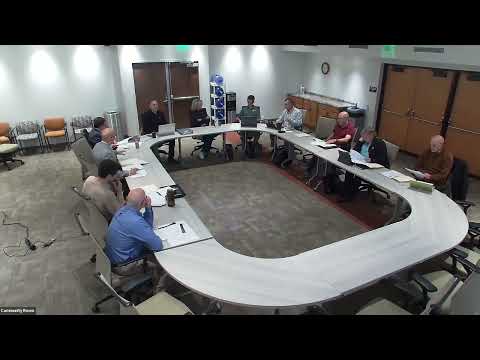
At its second and final review before a June council presentation, the Littleton Capital Improvement Sales Tax Board questioned rising personnel and 'soft' costs, heard details of a more ambitious 2026 pavement-management plan, and agreed to recommend a board name change while not altering charter meeting dates.
Kevin Orton, Littleton's budget manager, told the Capital Improvement Sales Tax Board at its second meeting that staff changed how they measure the fund's personnel share — moving from an expenditures-based metric to a revenue-based metric — to reduce volatility in the percentage reported to council. "This is new money," Orton said, explaining that 2026 budgets show newly reserved funds while previously approved but unspent amounts are carried forward in later ordinances.
The change in measurement and the broader question of how much the fund should pay for staff time prompted sustained discussion. Board members pressed staff on whether the fund was absorbing too many "soft" costs such as contract and procurement personnel. Orton said the city added two positions to the fund — an attorney and a procurement role — and described the allocation practice: staff time is assigned as a percentage to the 3A fund rather than charging each capital project directly.
Brent, who led the payment-management discussion, outlined the 2026 pavement-management program and the map in the packet. He said the year includes mill-and-overlay, slurry-seal and a reconstruction segment (Euclid, east of Windermere) and described one large project as "a 22 million dollar project." He characterized the 2026 pavement-management work as more ambitious than recent years and estimated the program at about "8.2 ish" million for the pavement-management component.
Board members and staff also discussed timing and reporting. Orton proposed aligning the board's review with the audited financial schedule so the board could present numbers closer to final audited results; after debate about whether to allow a 30- or 60-day lag, members suggested an optional third meeting if audit adjustments materially change the numbers. Orton said he would "pull back" on changing the charter meeting dates and instead recommended that the board ask council to change the board's name by resolution. "I don't think we're going to change the dates," he said. "We'll just change the name."
Members urged the staff to add more context to the report for council — notably maps and an executive-summary bullet noting concerns about rising personnel/management charges — and to include figures showing federal matching or leveraged grant funds. A representative from the historic-preservation commission noted the charter originally called for a historic-preservation representative and asked for clearer identification of historic projects; staff pointed to recent 3A-funded work on the Geneva Lodge and courthouse security and staircase work as examples.
The board confirmed it will finalize its memo and supporting visuals for the June presentations (staff referenced a June 9 study session and a June 16 financial presentation), will recommend a resolution changing the board's name, and will include an option in its report to request an Environmental Sustainability Board member be added to the board. No formal motions or votes were recorded during the meeting.
The board adjourned after staff agreed to update the memo and provide the additional visuals and matching-fund numbers requested by members.