Get Full Government Meeting Transcripts, Videos, & Alerts Forever!
Get email alerts on the School Discipline Policies topic
No spam. Unsubscribe anytime.
Policy committee votes to forward revised suspension and expulsion procedures with hearing-officer option to full board
Summary
The policy committee on Nov. 10 reviewed draft changes to Policy 7200 (suspension procedures) and Policy 7210 (expulsion procedures) that clarify when the superintendent or a hearing officer will handle reviews and hearings; after discussion the committee voted to send both policies to the full board.
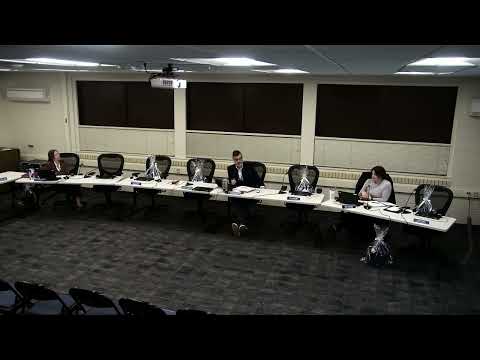
The policy committee met on Nov. 10 and voted to forward revised language for Policy 7200 (suspension procedures) and Policy 7210 (expulsion procedures) to the full board.
Stephanie, the committee chair, turned the discussion over to Dr. Barrett, the superintendent, who said he had synthesized earlier committee feedback into clearer draft recommendations and urged the committee to reach substantive agreement so the items could move to the board. "For review of suspensions of three days or less, the board shall designate the superintendent, designee or a hearing officer to conduct the review," Dr. Barrett said, presenting the proposed suspension text. He described a parallel approach for expulsions that preserves a required formal hearing and allows families to submit a written statement or appear in person when a hearing officer is used.
The proposed changes draw a firm line between lower-stakes suspension reviews and higher-stakes expulsions. Dr. Barrett summarized the practical thresholds in the draft: suspensions of three days or less would be handled by the superintendent, a designee or a hearing officer; for suspensions of four days or more the superintendent would decide whether to appoint a hearing officer. For expulsion hearings the draft says the board would rely on the superintendent to determine whether to designate a hearing officer, and when a hearing officer is used the student and parent or guardian "may provide a written statement to the board's consideration or may elect to appear in person before the board to provide that statement." Those options, the superintendent said, preserve families' ability to address elected members when the board makes a final decision.
Committee members supported the distinction. "I think it's important to have an impartial person conduct those hearings," Stephanie said, citing sustainability across future boards and the value of an independent reviewer to provide legal protection and consistent oversight. Molly, a committee member, raised operational questions about how hearing officers would be contracted and whether the district would retain a single person or use multiple hearing officers as-needed. "Do we contract someone for a duration of time, is it as needed?" Molly asked, pressing for details about availability and consistency.
Dr. Barrett responded that districts commonly use a range of options—superintendent or cabinet-level staff, or contracted hearing officers—and suggested fallback procedures if a preferred hearing officer is unavailable, including returning the matter to the superintendent or, if necessary, the full board for disposition.
After discussion and no requested substantive edits, Molly moved to forward Policy 7200 and Policy 7210 to the full board; Stephanie seconded the motion and the committee voted in favor. The committee also heard an announcement that the district has received a larger packet of policies to review; the chair said the committee will split those items across upcoming meetings to ensure adequate attention.
The committee's referral sends the proposed hearing-officer language to the full board for further consideration and any additional review required by board policy.