Get Full Government Meeting Transcripts, Videos, & Alerts Forever!
Get email alerts on the Home Rule Charter topic
No spam. Unsubscribe anytime.
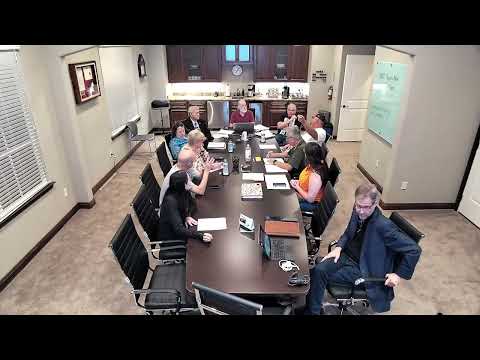
Willow Park charter commission sets town hall, coalesces around 30% petition threshold and debates budget-notice rule
Summary
The Home Rule Charter Commission set a public town hall for Nov. 13 and agreed verbally to a 30% petition-signature threshold to trigger charter-change elections while debating a proposed 14-day public-notice rule for budget amendments and requesting a legal review before finalizing the draft.
The Home Rule Charter Commission announced a public town hall at 6:30 p.m. on Thursday, Nov. 13 at Willow Park Baptist Church and said it will meet Nov. 19 to incorporate feedback before presenting the draft charter to the city council on Dec. 9 at 6 p.m., the Chair said.
The commission spent the bulk of the meeting debating several substantive rules to include in the proposed charter, including how many signatures should be required to force a charter-change election. "I like 30%," one committee member said during a long exchange over whether the petition threshold should be a small percentage of recent turnout, a flat minimum (for example 300–3,000 signatures), or a high share of registered voters. After discussion the Chair proposed and the commission agreed verbally to language setting the threshold at approximately 30% of registered voters at the last regular city election, with related drafting edits to remove ambiguous phrasing.
Commissioners also examined proposed language that would require public notice of any budget amendments "up to 14 days before final ratification of the budget." The Chair read the draft language and asked whether the charter should require a minimum notice period. An attorney advising the commission noted that state law requires certain budget timetables — for example, a proposed budget must be filed 30 days before the tax rate is set — and cautioned that a strict 14-day charter requirement could conflict with the council's workshop and amendment process. Commissioners described the 14-day proposal as intended to increase transparency but acknowledged practical constraints on the budget workflow.
On legal checks, an attorney present said he and a colleague (Judy El Masri) from his office will review the draft charter; the Chair asked that the legal review be completed within roughly 10 days after the Nov. 19 meeting so the commission would have time to incorporate any required changes before the Dec. 9 council presentation. "Once y'all have the document that you're good with, you are going to give it a once over, twice over," the attorney said, urging additional attorney review.
The commission also discussed vacancy-filling procedures. The current approach — allowing council appointment with the appointee required to stand for voter approval at the next regular city election — drew support, in part because elections can be costly and the town has sometimes had difficulty recruiting candidates on short notice. Commissioners noted statutory limits (for example, council may not appoint if more than 12 months remain in the unexpired term) and agreed the appointment-plus-ballot approach is a workable compromise.
Transition language and a municipal code review were another focus. Commissioners debated adding a requirement that existing ordinances, resolutions and regulations remain effective on the charter's effective date but be reviewed and conformed to the charter within a set timeframe. One commissioner read language used by another Texas city requiring the council to review and conform such documents "within three years of the effective date of this charter," and several members agreed that a staged review or transition period would be reasonable; one advisor estimated a comprehensive code cleanup might cost on the order of tens of thousands of dollars.
The Chair said he will publish a cleaned-up working draft by Friday that incorporates agreed text from commissioners (including language to be provided by Daryl and Carol) and that commissioners should read the full draft before the town hall. A commissioner asked the Chair to check with city staff about sending a TextMyGov reminder to increase town-hall turnout.
Votes at a glance: The commission approved the Oct. 22 minutes by voice vote after a motion and call for favor/oppose; a later motion to adjourn was made and seconded and the meeting was ended. No roll-call vote tallies were taken in the transcript.
Why it matters: The commission's decisions on petition thresholds, budget-notice language and transition obligations will shape how easy it is for residents to place charter amendments on the ballot, how transparent the city's budget changes must be, and how quickly the municipal code is harmonized with a new charter. The commission's plan for a legal review and a public town hall frames next steps ahead of the commission's Nov. 19 meeting and the Dec. 9 presentation to the city council.