Get Full Government Meeting Transcripts, Videos, & Alerts Forever!
Get email alerts on the Water Supply topic
No spam. Unsubscribe anytime.
Parker County water study urges regional public‑utility agency; Willow Park to consider joining
Summary
Consultants retained by Parker County presented options for regional water supply formation, distinguishing a public utility agency (no taxing power) from a legislated water district (possible taxing authority). Officials said the county is exploring membership, governance, funding and a formation timeline that could include public notice and elections.
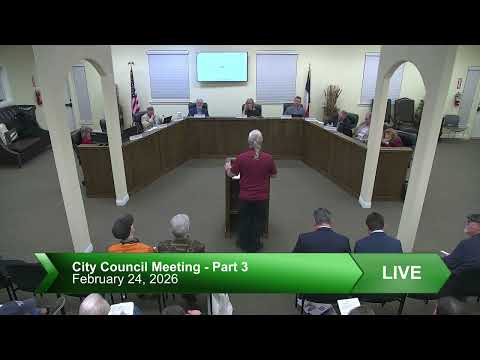
Consultants from Nichols Engineering on Feb. 24 presented a Parker County water‑supply evaluation and outlined options for regional governance to preserve groundwater and plan for future demand.
Jessica Brown (Nichols Engineering) told the Willow Park City Council the study compared two primary formation options: a legislated water district (which can have taxing authority if authorized by statute) and a public utility agency (PUA), which would be formed via ordinance/interlocal agreement and would not have taxing power. The PUA model under discussion would allow publicly owned water systems and participating cities to form a regional utility for supply, transmission and funding but would not give investor‑owned utilities voting membership on the board.
Brown said the county has drilled many wells historically and that groundwater supplies are becoming less reliable as wells are drilled deeper and yield declines. The consultants described membership and governance questions (who appoints board members, voting structures), funding options (water sales, debt, grants/loans), and the need to coordinate service boundaries. Brown said a PUA can issue debt and operate as a separate set of books so participating entities do not carry the debt on their general ledgers.
Council members asked about whether a larger coalition lowers per‑entity costs and whether Willow Park benefits from joining. Consultants answered that economies of scale can reduce per‑unit infrastructure costs for large assets (for example, a 10 MGD pump station can be cheaper per unit capacity than a 5 MGD station) and that participation decisions hinge on cost‑sharing and governance preferences.
Next steps noted in the presentation include additional meetings with potential members, drafting ordinances and interlocal agreements, and public notice steps if a formation route requires election(s); the consultants estimated a summer schedule for ordinance passage and interlocal agreements and noted a last day to call an election in mid‑August if needed.
What happens next: staff will bring the issue back to council for direction in coming months and council will decide whether to participate in formation discussions and the PUA/ district options.