Get Full Government Meeting Transcripts, Videos, & Alerts Forever!
Get email alerts on the Home Rule Charter Submission topic
No spam. Unsubscribe anytime.
Willow Park commission approves initial home-rule charter and readies mailer, town halls ahead of May vote
Summary
The Willow Park Home Rule Charter Commission voted to approve the initial proposed charter and will submit it to the City Council for possible placement on the May ballot; commissioners resolved legal-review edits, set outreach steps including voter mailings and town halls, and left vote tallies unrecorded in the transcript.
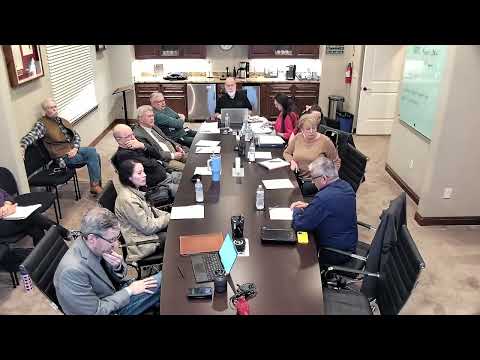
The Willow Park Home Rule Charter Commission voted to approve the initial proposed home-rule charter and directed staff to submit the document to the Willow Park City Council for consideration at the council’s Jan. 27 meeting, the commission decided during its working meeting.
The commission’s co-chair, Daryl, moved to approve the charter and Carol seconded the motion; Chair Jane called the vote and announced the motion carried. The transcript does not include a roll-call tally or individual votes.
The approval followed a detailed review of edits prompted by the city attorney’s legal review and a series of drafting decisions the commission said were meant to clarify who and what the charter governs. The city attorney (Fritz) had recommended a single substantive change to Section 402A (Personnel System) to add an explicit reference to “applicable federal and state laws” and to remove the word “solely” from a merit-principle sentence; the commission accepted that revision. Fritz also participated in drafting discussions about limits on political activity by city officials and about timing for initiative and referendum notices.
Commission members debated wording in Section 902 (activities prohibited) and agreed to replace potentially overbroad phrasing that used "no person" with narrower language aimed at specifying when a city officer or employee is acting in an official capacity. Chair Jane summarized the intent: the revised wording should prevent discrimination in appointments while avoiding unintended breadth that could sweep in ordinary private speech.
On outreach and election logistics, commissioners focused on voter notification. The group agreed the mailed charter should be easy to read and accompanied by accessible resources such as a short cover letter, FAQs and a QR code linking to the full text and recordings. The commission scheduled three town halls — Feb. 19, March 5 and April 7 — to follow distribution of the mailed materials. Chair Jane said she was concerned many residents were unaware of the initiative: “I’m really seriously afraid that there’s 80% of the city that doesn’t have any idea,” she said, urging clear outreach.
Members discussed the timing of the required mailer. Commissioners and counsel agreed that the charter mailing should be completed well before early voting and proposed a practical target for mailings in early April while clarifying the legal minimum: the commission resolved to require the materials be mailed not less than 15 days before the first day available to cast an in-person ballot for the election. As city attorney Fritz summarized in discussion, some timeline choices for publication are not mandated by state initiative law, so the commission set its own clearer standard for voter access.
The commission also made several drafting and formatting choices to help voters read the mailed packet. They discussed reducing page count by adjusting type, preserving a table of contents, and including a short, neutral cover letter written by commission members that highlights substantive differences between general-law and home-rule government — for example, adding a council seat and giving the mayor a vote under the proposed charter. Carol volunteered to draft the letter.
Chair Jane said she would finalize the formatted charter and circulate a cleaned version to commissioners and the city secretary; that version would be submitted to the City Council for placement on the ballot. Commissioners agreed to assist with outreach and attend the council meeting as a group if helpful.
The commission adjourned with the instruction that if the City Council requests changes, the commission would consider next steps; otherwise the charter will move to the council packet for its Jan. 27 meeting and — if added to the council’s agenda and approved there — proceed toward the May election schedule.