Get Full Government Meeting Transcripts, Videos, & Alerts Forever!
Get email alerts on the Foreign Policy topic
No spam. Unsubscribe anytime.
House leaders defend Operation Epic Fury as necessary response to Iran
Summary
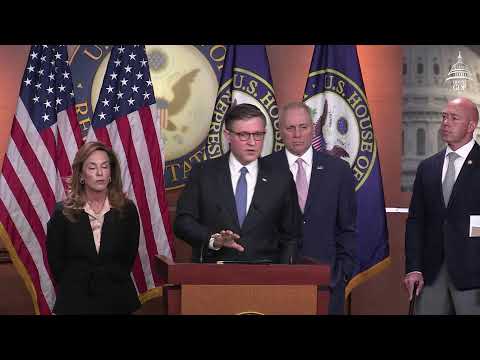
House Speaker Mike Johnson, Rep. Brian Mast and other Republican leaders on the floor defended Operation Epic Fury as a limited, lawful response to what they described as an imminent Iranian threat, and said Congress will exercise oversight while opposing a near-term War Powers resolution.
House leaders used floor remarks to defend Operation Epic Fury and to frame it as a necessary, lawful response to threats from Iran.
Speaker Mike Johnson, House leadership and members who spoke described the operation as narrowly targeted and justified by recent attacks on U.S. personnel and facilities. "We're four days in so far on Operation Epic Fury. It's been limited, precise, and extremely lethal," Johnson said, calling the early results "very encouraging." Brian Mast, chairman of the House Foreign Affairs Committee, said the campaign addressed a decades-long pattern of Iranian attacks and that the president had the authority to act.
The leaders said Congress had been briefed by senior military and national-security officials. "Last night, members of the House received another very thorough briefing on the operation," Johnson said, listing briefers from the Pentagon, the Joint Chiefs, the Department of State, the CIA and the Department of Justice. Those briefings, the speaker added, were intended to inform congressional oversight.
Mast framed the strikes as a response to an "imminent threat," saying Iran and its proxies had repeatedly attacked U.S. forces and commercial shipping. "President Trump had the authority to conduct this very limited operation under Article II and the War Powers Resolution Act," Mast said.
Members also discussed the military objectives. Johnson described the operation as having two components: degrading Iran's missile capabilities and hitting its naval assets, which he said were being used to strike American forces and allies.
Several speakers argued that seeking to curtail the operation with a War Powers resolution would hamper military effectiveness. "I think passage of a War powers resolution right now would be a terrible, dangerous idea," Johnson said, warning that an immediate, binding restriction could "kneecap our own forces." At the same time, he repeated that Congress retains the right and duty to exercise oversight.
What happens next: Johnson and other leaders said congressional oversight would continue and that a War Powers resolution was expected to be debated by some members. Leaders urged colleagues to consider the classified and unclassified briefings they received before voting on any procedural restraint.