Get Full Government Meeting Transcripts, Videos, & Alerts Forever!
Get email alerts on the Stormwater Management topic
No spam. Unsubscribe anytime.
Sarasota County’s NEST urges low‑maintenance pond buffers to curb runoff and boost wildlife
Summary
Sarasota County Neighborhood Environmental Stewardship Team (NEST) coordinator Jen explained how residents can request site visits to create ‘no‑mow’ or low‑maintenance buffers around stormwater ponds to reduce pollutant runoff and increase biodiversity in downstream bays and estuaries.
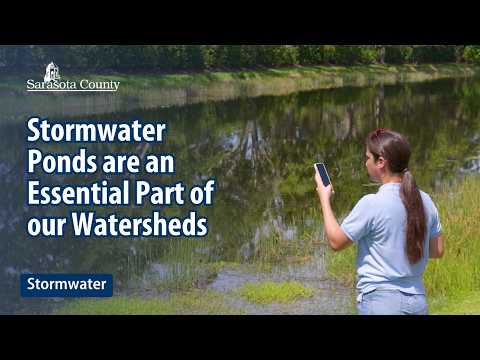
Jen, Sarasota County’s Neighborhood Environmental Stewardship Team (NEST) coordinator, described how the county’s outreach program helps neighborhood groups manage stormwater ponds and improve local habitat. "Part of my job is to go out to neighborhoods to educate communities on better management practices for their ponds," she said, explaining that residents typically research a pond, contact NEST by email or phone, and then arrange a site visit.
At those visits, Jen said, staff look for opportunities to establish a "no MOW zone" or a low‑maintenance buffer around a pond’s perimeter that can limit the amount of pollutants entering stormwater ponds. "We also like to look for a lot of biodiversity, so a lot more plants, which brings a lot more animals from butterflies and bees and birds," she said, adding that increased plant and animal life strengthens the surrounding community.
A resident who worked with the program recounted the neighborhood site visit, saying the group started at what they had identified as their worst pond, "pond number five," and walked all the ponds. The resident praised Jen’s neutral perspective and technical observations, saying she "could see where the erosion was coming from, the gutters off the houses," and that Jen’s assessment helped the group see what to address in addition to establishing low‑maintenance zones.
Jen framed the pond work as part of a larger environmental benefit: "By creating healthier ecosystems inland, it just leads to healthier ecosystems downstream in our bays and estuaries." Residents with questions or who want NEST assistance were directed to scgov.net for more information.
The presentation was informational; no formal motions or votes were recorded during the session. The next step for interested residents is to contact the county through the posted website to request a site visit and guidance from the NEST coordinator.