Get Full Government Meeting Transcripts, Videos, & Alerts Forever!
Get email alerts on the Child Transport Safety topic
No spam. Unsubscribe anytime.
Committee adopts substitute for youth-transport bill after survivor and Paris Hilton testimony
Summary
The House Families and Veterans Committee adopted an H-1 substitute for HB5514 that prohibits blindfolds, handcuffs and other restraints during routine transport of children to youth residential treatment and bars pickups between 9:00 p.m. and 6:00 a.m.; the measure passed on an 11-0 roll call after testimony from survivors, advocates and a pre-recorded statement from Paris Hilton.
The committee voted to adopt an H-1 substitute for House Bill 5514, a measure that would limit the use of restraints and restrict nighttime pickups for children transported to youth residential treatment programs.
Sponsor Representative Cam Cavett told members the H-1 substitute strengthens the bill by defining youth residential treatment programs and prohibiting the use of blindfolds, handcuffs and other restraints "except in true emergencies where there is immediate risk of harm either to themselves or others and no safer option is available." Cavett also said the substitute prohibits pickups between 9:00 p.m. and 6:00 a.m.
The hearing featured survivor testimony and advocacy presentations. Paris Hilton provided pre-recorded testimony that recounted being taken from her bed at 16 and physically restrained: "There was no choice... I was handcuffed, carried out of my home while I screamed for help." Hilton urged lawmakers to support HB5514 to close an unregulated gap in transport oversight.
Caroline Cole of 1111 Media Impact, speaking for the advocacy coalition supporting the bill, described transport as a distinct phase that can leave children with permanent emotional and physical scars and urged the committee to start by building registration infrastructure and training requirements for transport providers.
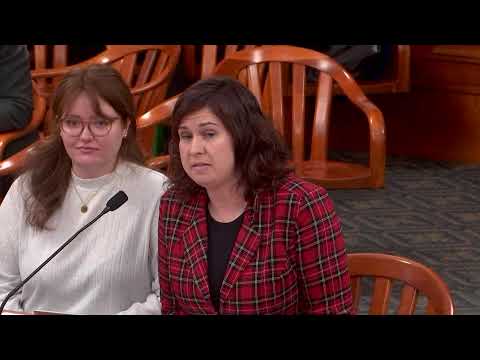
Two survivors who testified in person—Kira Frankowski and Elizabeth Bennett Fawcett—gave detailed accounts of being transported as teenagers, describing the use of zip ties, weighted boots, blindfolds, handcuffs and alleged chemical restraints. Frankowski said survivors commonly report post-traumatic stress symptoms, nightmares and long-term family strain; Bennett Fawcett described being taken across the border to a facility in Mexico and alleged physical, sexual and psychological abuse while held there.
Committee members pressed on enforcement and liability questions. Members were told by witnesses that: transport providers are often unregulated and sometimes operate from out of state; parents sometimes sign liability disclaimers that limit the opportunity for lawsuits; and the H-1 creates operational guidelines but does not itself create a private right of action or change liability language for facilities that contract with private transporters.
Representative Fox moved to adopt the H-1 substitute for HB5514; the clerk recorded 11 yeas, no nays and no passes and the motion prevailed. The transcript records the adoption of the H-1 substitute on a unanimous roll call.
The committee also received cards and written testimony in support from advocacy organizations. The committee did not record final floor reporting of HB5514 in the provided transcript; the H-1 substitute was adopted in committee.