Get Full Government Meeting Transcripts, Videos, & Alerts Forever!
Get email alerts on the Zoning Mobile Home topic
No spam. Unsubscribe anytime.
Springfield subcommittee explores easing 20-foot RV limit, eyes site-review and lot-size options
Summary
A city subcommittee opened discussion on amending Springfield Zoning Ordinance Section 4.4.40 to address a 20-foot length limit for mobile homes and recreational vehicles, weighing lot-size carve-outs, site-plan review, weight-based measures, and temporary allowances; staff will draft options for a follow-up meeting.
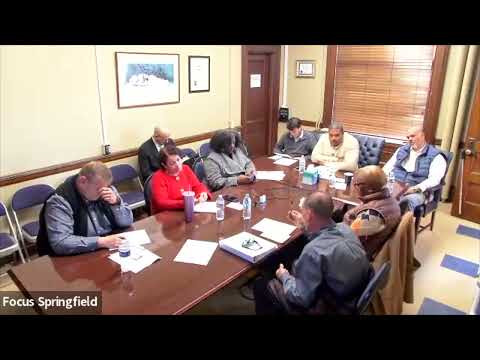
A Springfield City Council general government subcommittee spent much of its March 18 meeting discussing proposed changes to the cityzoning rule that limits mobile homes and recreational vehicles to 20 feet.
The discussion was prompted by resident Dave Bollier, who said he has stored a camper on his property for years and received a warning under the current ordinance. "My camper is not used for dwelling," he told the subcommittee, adding it is kept "out of sight, out of mind," properly registered and insured.
Zoning administrator Mike Jacob said Springfields smaller lot sizes and a wide mix of housing types make a blanket increase to the length allowance difficult. "Imagine trying to fit something bigger than 20ft on some of these other lots," he said, noting the city has many nonconforming lots around 5,000 square feet.
Members discussed several possible approaches: retain a 20-foot baseline but allow larger units on single-family lots (Residence A and A1) via site-plan review or a special permit; use weight or gross vehicle weight as an alternative to length; create explicit carve-outs for historic districts; or trigger relief only when a complaint is filed. Councilors expressed concern about imposing large fees for planning-board review and asked staff to consider a lower-cost administrative site-review option.
Attorney Moore advised that ordinance language can exclude particular areas, such as historic districts, but cautioned careful drafting and stated the rationale for any carve-out should be articulated to avoid arbitrary decision-making.
The subcommittee did not vote on any ordinance change. The chair asked city staff to draft language and return to the subcommittee with options that could include site-plan review procedures, lot-size thresholds, a weight-based metric, and procedures for appeals. The chair also asked staff to be mindful of enforcement burdens and suggested that, while the amendment is considered, staff should use judgment and "grace" in enforcement cases where residents are complying in spirit.
The next step will be for Attorney Moore and Zoning Administrator Mike Jacob to prepare draft language for the committee to review at a future meeting; committee members signaled they want to avoid unnecessary costs for homeowners while ensuring emergency access and neighborhood character are protected.
Ending: The subcommittee recessed after agreeing to return with draft ordinance language; no formal amendment was adopted at the meeting.