Get Full Government Meeting Transcripts, Videos, & Alerts Forever!
Get email alerts on the Transportation topic
No spam. Unsubscribe anytime.
Spokane reviewers push transportation element toward multimodal access and parking-based funding tools
Summary
Reviewers of Spokane's transportation chapter emphasized prioritizing walking, biking and transit in level-of-service language, steering freight away from pedestrian corridors and exploring parking benefit districts and curbside management to fund street improvements.
Reviewers of Spokane’s transportation chapter proposed tightening policy language to prioritize multimodal access and to link development and infrastructure investments to everyday access to goods and services.
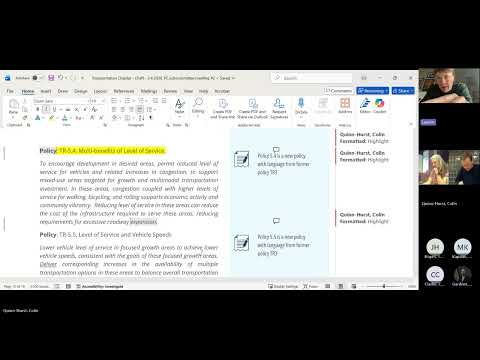
Staff and commission members spent the session debating wording changes to the chapter’s level-of-service policies so they explicitly include transit alongside walking, biking and rolling, and to make clear the policy aligns with citywide safety goals and selected growth strategies. Jamie Hayes of Spokane County attended to observe the review and answer coordination questions; Hayes opened the session saying, “Hi, this is Jamie Hayes with Spokane County.”
The group discussed keeping detailed concurrency measurements in an appendix while moving high-level goals into the policy text. Staff explained that state requirements mean transportation concurrency standards must be present in the transportation chapter, but the implementation metrics can be cross-referenced in supporting appendices.
Participants also focused on curbing freight impacts in active commercial corridors and on financing street activation. Members proposed language to “target development and transportation infrastructure to provide access to daily goods and services,” and debated parking benefit districts, parklets and paid curbspace as ways to generate maintenance funding. One participant framed timing for the plan: “in June is when we're supposed to have a completed draft of the comp plan, including the transportation element,” a staff member said.
No formal votes were recorded at the meeting; the group concluded with staff noting an expected schedule to deliver the draft appendix in April and the complete draft comprehensive plan in June, after which the transportation element will be circulated to other agencies for review.