Get Full Government Meeting Transcripts, Videos, & Alerts Forever!
Get email alerts on the Human Resources topic
No spam. Unsubscribe anytime.
Board hears pitch from Kelly Education to manage substitute staffing; vendor says weekly pay and local recruiting will improve coverage
Summary
Hoke County Schools heard a detailed proposal from Kelly Education to convert substitute management to a staffing partnership, with the company saying it would recruit locally, employ substitutes (weekly pay), manage Frontline and provide an on‑site client manager; board members pressed for cost details and protections for the district's existing substitute pool.
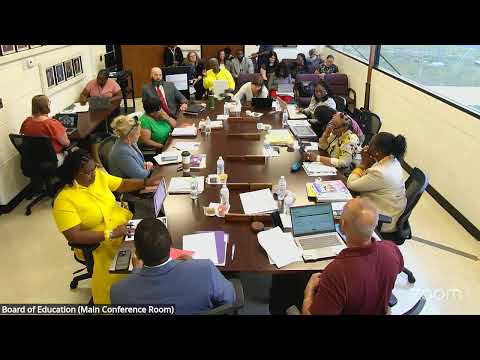
The Hoke County Schools board on April 14 heard a presentation from Kelly Education about a proposed contract to manage the district's substitute staffing.
District staff member (Speaker 3) framed the need as a response to inconsistent fill rates and increasing administrative burden. Kelly representatives, including Clarence Middlebrooks, said the firm would recruit locally, employ substitutes directly, pay them more frequently and provide a dedicated on‑site client manager to reduce school staff time spent filling absences. "We're a grassroots organization... these folks are coming from your community," Kelly representative Clarence Middlebrooks said.
Kelly said it can offer weekly payroll and manage the Frontline calling system so school bookkeepers and principals would no longer handle day‑to‑day substitute placement. The company claimed improved coverage in other districts — "on the low end they're going to get a 95%" fill rate in one client example — and said a client manager would visit schools monthly to monitor implementation, recognition and retention efforts.
District staff presented cost context: the district spent roughly $2 million on substitutes in 2024 and $2.2 million in 2025, and current substitutes (with employer costs) are paid at approximately $125.95 per day while teacher assistants covering classes cost about $252.30 per day. Kelly estimated a representative per‑day cost "around $150 per" substitute, but acknowledged exact pricing would depend on the services the board selects and implementation details.
Board members asked how Kelly would treat the existing substitute pool and whether substitutes could keep school‑level preferences. Kelly said existing subs would be "grandfathered in," could retain location preferences, and that the firm would actively recruit locally (job fairs, community outreach) to expand the pool. On contract length, Kelly said the engagement terms include a client‑management and implementation window; a staff speaker said there is a 60‑day opt‑out provision discussed during Q&A.
Supporters argued the model would keep teacher assistants in their instructional roles and reduce classroom disruption. Skeptics pressed for clearer dollar estimates and assurances that the district would not lose local control of hiring choices. The presentation closed with Kelly offering follow‑up implementation Q&A and a packet of client references and performance metrics.
Next steps: the board received the presentation and asked follow‑up questions; no contract vote was recorded in the provided segments.