Get Full Government Meeting Transcripts, Videos, & Alerts Forever!
Get email alerts on the Veterans Health topic
No spam. Unsubscribe anytime.
Committee advances three-year pilot to offer hyperbaric oxygen therapy to Michigan veterans
Summary
The House Families and Veterans Committee adopted an H-1 substitute for HB 5456 to create a three-year pilot providing hyperbaric oxygen therapy to veterans with traumatic brain injury or PTSD; HB 5457 would establish a fund but funding requires a future appropriation. Testimony included veterans, VFW and clinical advocates.
Representative Schmaltz told the House Families and Veterans Committee that House Bills 5456 and 5457 would expand treatment options for veterans suffering traumatic brain injury and post-traumatic stress disorder. “These bills are all about helping our veterans,” Schmaltz said, describing a three-year pilot with medical oversight, certified providers and safety standards for both hard- and soft-sided chambers.
The sponsor said the pilot would be administered through grants from a fund created by HB 5457, but acknowledged the program is unfunded until the legislature appropriates money. A legislative staff member clarified that HB 5457 “establishes that fund” but that “money needs to be put in the fund to pull money from the fund.”
Several veterans and clinical advocates urged the committee to approve the bills so veterans could access treatment now while the state gathers data. Retired Air Force veteran Kevin Hensley described deployments near burn pits and said scans of his lungs and brain show injuries he attributes to toxic exposure. Hensley recounted paying tens of thousands of dollars out of pocket and traveling for treatment, and said the pilot would provide hope and research to push federal recognition of hyperbaric oxygen therapy for TBI and PTSD.
Eric Callie, representing the Veterans of Foreign Wars Department of Michigan, described repeated concussive exposures in combat and long-term harms he said were missed historically by VA screenings. Callie said he benefited from hyperbaric treatment at a program that included PET scans and reported improved functioning; he urged support for the pilot to create an evidence-based pathway for treatment.
Dr. Robert Beckman of TREAT Now, testifying by videoconference, summarized national advocacy and state-level activity, noting that 14 states have authorized treatment programs and some states have appropriated funding. “We believe that facts matter,” he said, urging lawmakers to support the pilot so state action can help prompt federal change.
Shannon Kennett, executive director of the International Hyperbaric Association, told the committee the bill’s language is inclusive of both hard- and soft-sided chambers, which she said matters for rural access and provider availability. A remote presenter representing the American College of Hyperbaric Medicine and related organizations urged data collection and safety language while asking lawmakers to monitor hospital pricing and access barriers.
Committee members pressed sponsors on cost and program design. Witnesses estimated a starting pilot appropriation in the range of $2 million to fund treatment for roughly 150 to 200 veterans over three years, with per‑patient caps described in testimony (for example, up to $10,000 for 40 dives in a hard chamber; about $7,000 for soft‑sided treatment). The sponsor and advocates emphasized the pilot’s reporting and safety requirements, including standardized neuropsychological assessments and annual legislative reports.
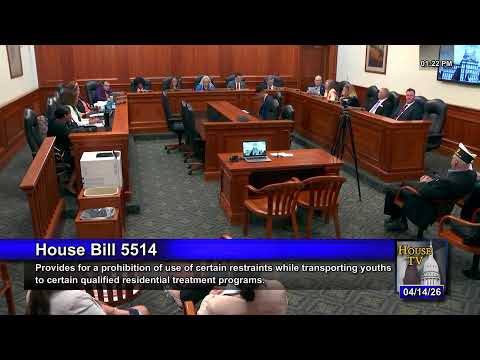
After testimony, Representative Johnson moved to adopt an H‑1 substitute for HB 5456. The clerk called the roll and the committee voted 11‑0 to adopt the substitute; the chair announced the motion prevailed. The committee also voted 11‑0 to report HB 5514 (as H‑1) and HB 5715 to the floor with recommendation.
Votes at a glance
• HB 5456 (H‑1 substitute): Adopted 11‑0 (motion to adopt H‑1 by Representative Johnson). Outcome: H‑1 substitute adopted by committee and bill advanced. • HB 5514 (H‑1): Reported to the floor with recommendation 11‑0 (motion by Representative Fox). • HB 5715: Reported to the floor with recommendation 11‑0 (motion by Representative Wozniak).
What happens next
Committee members and sponsors said funding for the HBOT pilot still requires a separate appropriation process. The bills were advanced from committee to the House floor with committee recommendation; any allocation of money will depend on future appropriations actions. The committee adjourned with no further business recorded.